
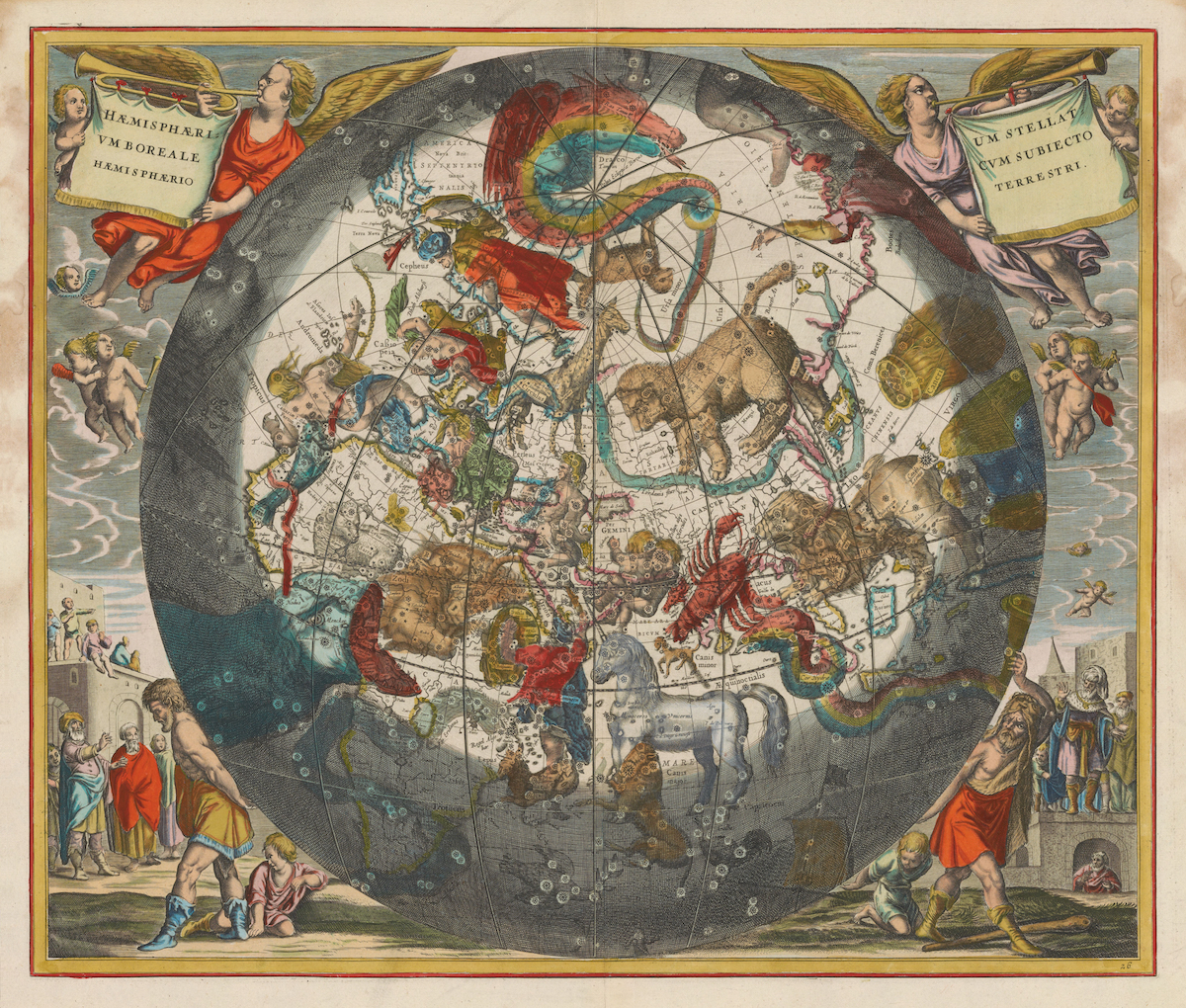
Astrology and astronomy: where they overlap and where they part
Astrology and astronomy share a sky, a set of coordinates, and a long stretch of history. They differ on one point, and that point turns out to be the whole story. Astronomy describes what is there. Astrology reads what those positions are said to mean for a person. Neither field is the other, and neither is the other's rival. The difference rewards a slow look, because it explains why the two can sit side by side without competing.
The Same Sky, Two Different Questions
Both traditions start with observed positions: the Sun, the Moon, the planets, the stars. An ephemeris - the table of where celestial bodies sit at a given moment - is astronomical data. A birth chart depends on that data for its accuracy. When an astrologer says a planet sits at 14 degrees of Leo, the number comes from the same positional system an astronomer uses. The zodiac itself is a measurement convention, a way of dividing the sky into twelve 30-degree segments, and its boundaries are astronomical by definition.
The parting comes at interpretation. Astronomy makes no claim that a position means anything for a person. Astrology assigns significance: a placement is read as a tendency, a theme, a tone. That interpretive step is the departure point, and it is a step astronomy does not take and does not need. Here, astrology is reflection and entertainment, a symbolic language rather than a scientific prediction, and holding that frame keeps the comparison honest.