Where the Sensitivity Is Said to Sit
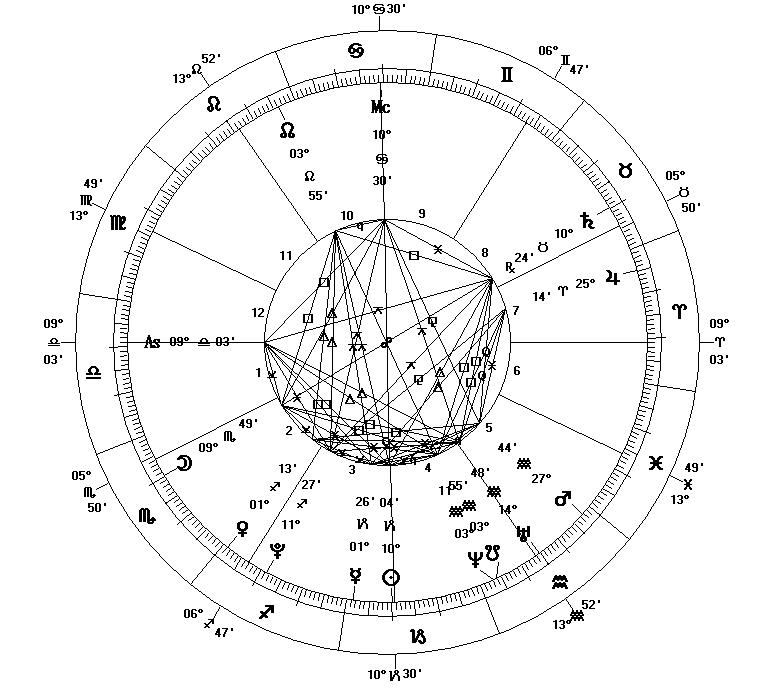
In this placement, the sensitivity is described as resting right at the front door of the self. The first house is the part of the chart associated with how someone arrives in a room: posture, style, the face turned toward the world. With Chiron here, astrologers suggest the question of "how do I come across?" carries unusual weight. Early messages about being too much, too little or somehow different are said to leave a lasting impression. None of this is fated. It is read as a lens, not a sentence, and many people with this placement simply grow up more alert than most to how they are perceived.
Because the first house also speaks to the physical self, Chiron here is often read through the body: a felt sense of awkwardness, a feature once wished away, a sensitivity to being looked at. Astrologers frame this as the body acting as a messenger rather than a problem to solve. The reading is about attention, not diagnosis. If a physical or mental health concern is real, that belongs with a qualified professional, and the chart is not consulted for it.
A related theme is comparison. Chiron in the first house is said to make other people's ease look effortless, as though everyone else received instructions that went missing. That perception is the wound's favorite trick, and naming it is often where the growth begins. In practice, it shows up in small, ordinary moments: catching a reflection and editing it before anyone else can, rehearsing a sentence before saying it, noticing who seemed comfortable in a room and quietly filing that away as evidence. None of this is a flaw in the person. It is what happens when a chart's most visible house also carries its most sensitive point. The first house is the one everyone else sees first, and Chiron is the placement that asks to be handled with care. Read together, they describe someone who learned early to watch, and who learned it so well that the watching became a skill before it ever became a burden.