
Jupiter Conjunct Saturn in a Birth Chart Explained
Birth Charts

Jupiter Conjunct Saturn in a Birth Chart Explained

Jupiter conjunct Saturn in a birth chart: how astrologers read this rare blend of expansion and restraint, and what it is said to mean.

Hemeswari4 min read
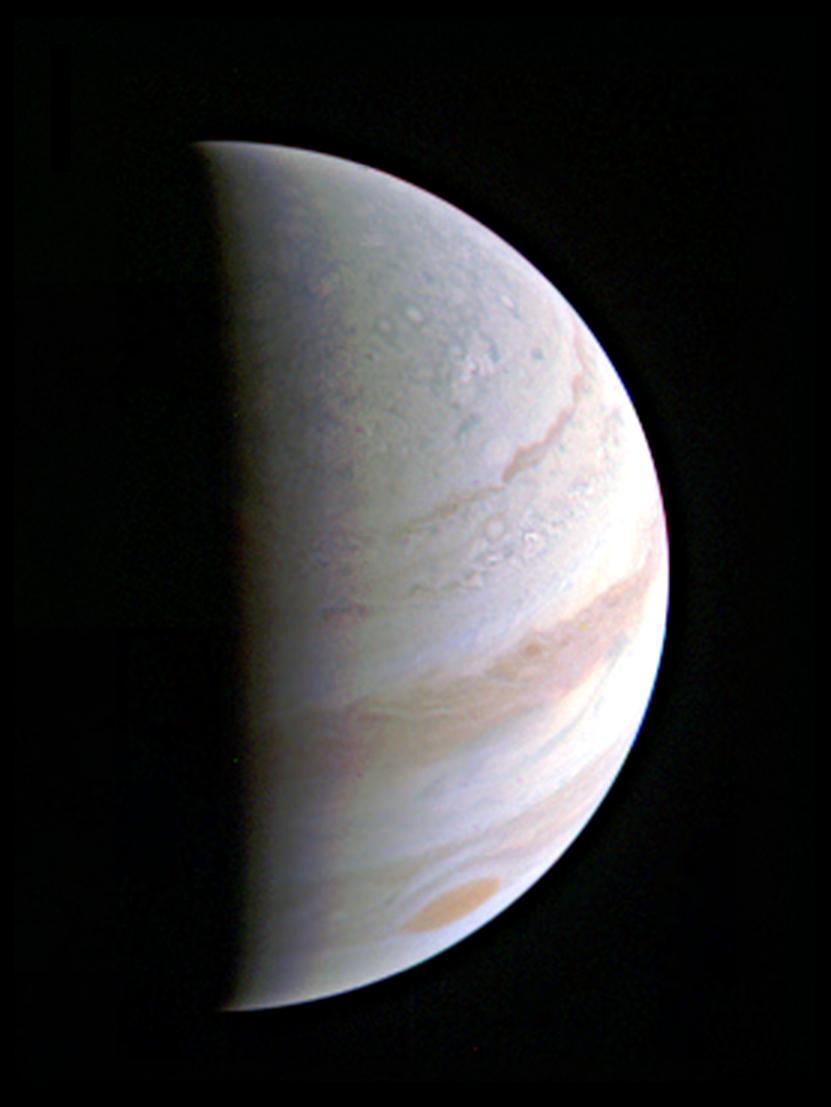
Photo: NASA/JPL / NASA (Public domain)

Jupiter conjunct Saturn in a birth chart describes a single instinct that wants to grow and to build at once. In Western astrology, a conjunction is an angle of about 0 degrees, with the two planets side by side in the same part of the sky. Astrologers read it as fusion: the pair acts as one combined force rather than two separate voices. Jupiter is the planet of growth, generosity, and belief, the place where someone is inclined to expand. Saturn is the planet of structure, responsibility, limits, and what matures slowly. Put them together in a natal chart, and astrologers tend to describe measured ambition rather than easy luck.

What a Jupiter-Saturn Conjunction Means in a Birth Chart

The fusion is the whole point. Jupiter wants more; Saturn asks what it costs. Read together, the two are said to describe someone whose optimism carries a plan attached, or whose caution is always negotiating with a larger hope. Astrologers often frame this as a lifelong conversation between faith and evidence, where neither voice fully wins.

What makes the pairing distinctive is the pace. In the sky, Jupiter and Saturn are slow-moving planets, and a conjunction between them is a rare meeting rather than a quick pass. In a birth chart, though, the placement is a fixed feature read for character, not a passing condition read for timing. That distinction matters. A transit is something that happens to a chart; a natal conjunction is part of the chart itself. Astrologers read the natal version as a permanent texture of personality, a default setting the person returns to again and again.

How Astrologers Read the Combined Placement

In its more flowing expression, the pairing is read as patient, well-organized expansion: the person who builds something durable because they genuinely believe in it. In its more difficult expression, the same tension can look like stop-start momentum, where enthusiasm and self-doubt trade places. Neither reading is a verdict. Astrologers describe a pattern and its possible textures, not an outcome, and the placement is neither good nor bad on its own.

One strong expression and one challenging one

The strong expression tends to get described as disciplined faith: a person who trusts a long project enough to keep showing up for it. The challenging expression gets described as a push-pull between wanting the reward and dreading the work, or between big promises and quiet hesitation. Both are readings of the same underlying tension, and most astrologers would say a real chart holds a mix of the two depending on circumstances, mood, and maturity.

The orb, and why it matters here

A conjunction is usually counted within about 8 to 10 degrees, tighter for a stronger effect. Because Jupiter and Saturn move slowly, an aspect between them spreads across a wide band of a chart, so the orb and the house placements are what make it personal rather than generic. A wide conjunction in a quiet part of the chart reads very differently from a tight one sitting on the Ascendant. This is why astrologers resist reading the pair in isolation: the exactness of the angle and its location set the tone before anything else is considered.

The Sign and House Shape the Story

The sign colors the style. In an earth sign, the combination is often read as practical and deliberate; in fire, as conviction that wants to be acted on; in air, as ideas that need a framework; in water, as a search for meaning that asks for emotional steadiness. These are flavors of the same theme, not separate placements.

The house is where the theme plays out in daily life. In the second house, it might be read as a careful relationship with resources and self-worth; in the ninth, as a life of belief and study that wants a structure behind it; in the tenth, as ambition that matures in public view. The house tells you where the growth-and-structure conversation keeps returning.

Jupiter Conjunct Saturn in Context

This pairing is not the same as a transit, and it is worth keeping the two separate when reading astrology generally. A transit is a passing condition, read for timing; the natal conjunction is a fixed feature of the chart, read for character. Astrologers also look at what else aspects the pair, since a supportive aspect can ease the tension and a harder one can sharpen it. For background on how aspects are measured, the glossary at Sky & Telescope and the reference material at Britannica are useful for the astronomy side of the picture.

Related coverage on what conjunctions mean generally and how the slow-moving planets behave in a birth chart is worth reading alongside this. The takeaway is simple: Jupiter conjunct Saturn in a birth chart is read as growth with a blueprint, a placement that rewards patience and tends to get more interesting with age.

Today's Horoscope

November 5, 2026

All signs →

Get Your Horoscope in Your Inbox

A weekly note on your sign, the moon, and what the stars are up to. No spam, unsubscribe anytime.

We respect your privacy. Unsubscribe at any time.

Jupiter Conjunct Saturn in a Birth Chart Explained | Horosly