
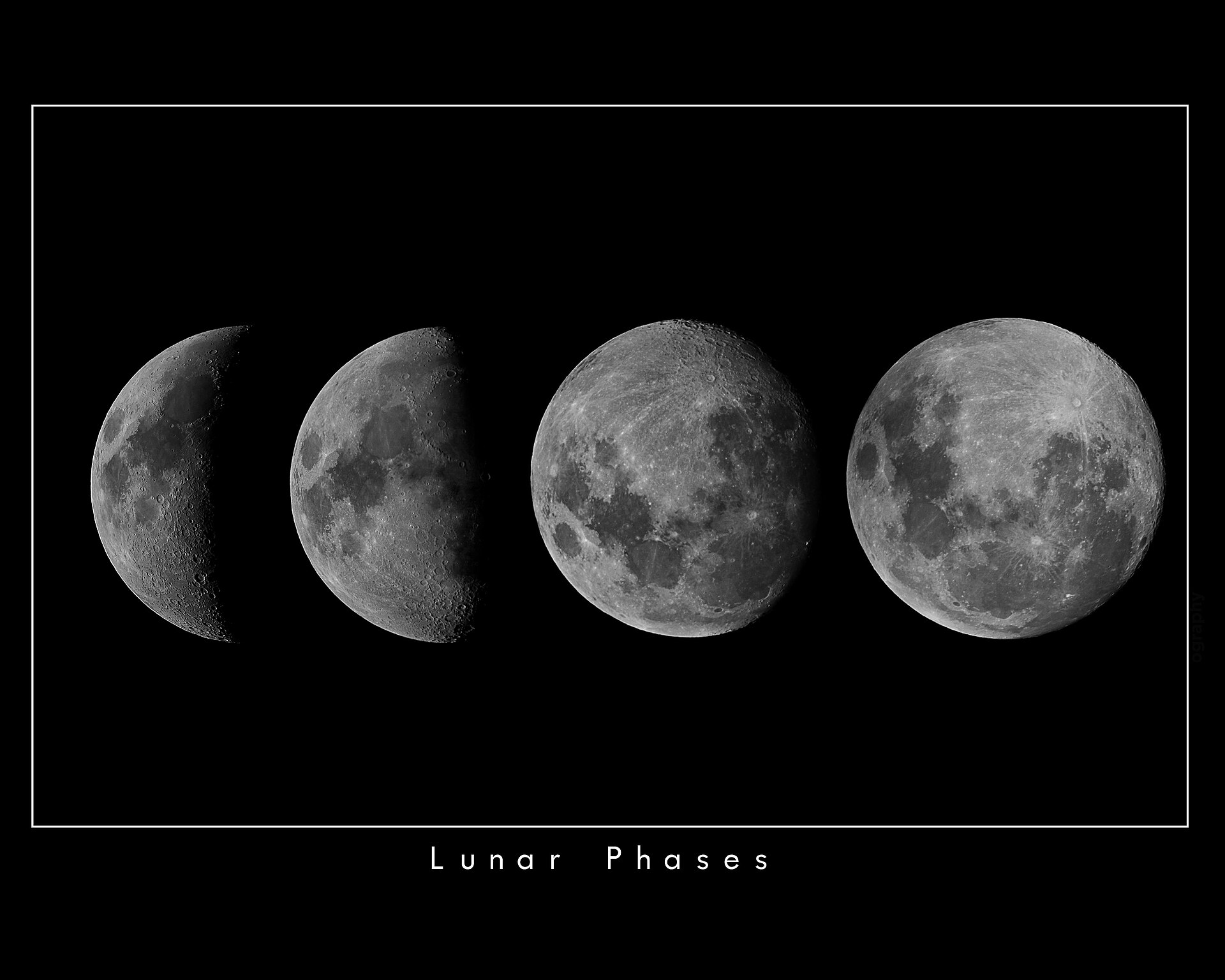
Moon Phases Explained: What Each One Means
Photo: David Warrington from England / Wikimedia Commons (CC BY 2.0)
Moon

Moon Phases Explained: What Each One Means

Nagi4 min read

The Eight Moon Phases and What Each Is Read For

Astrologers read the moon's monthly cycle as a story of intention, growth, release, and rest. Each of the eight phases marks a step in that story, tied to the simple astronomy of how much of the moon's lit face we see from Earth as it orbits us. Here is how each phase is traditionally interpreted.

The Four Building Phases: New Moon Through First Quarter

The cycle begins with the new moon, when the moon sits between Earth and the sun and its lit side faces away from us. In astrology, this dark phase is read as a blank slate. It is said to be a time for setting quiet intentions, starting projects, or planting a seed you hope to grow. Because nothing is visible yet, the read is about potential rather than proof, so astrologers often suggest you keep your plans private here.

Advertisement[SIDEBAR_RIGHT_2]

Next comes the waxing crescent, the first slim sliver of light. Where the new moon is pure potential, the waxing crescent is read as the first tangible sign of movement. It is traditionally associated with hope and a cautious push forward. Astrologers see this as the moment an idea starts to take shape, but is still fragile, so the guidance is to nurture it without forcing it.

The first quarter moon appears as a half-lit disk, roughly one week into the cycle. This is a square aspect between the moon and the sun in the sky, and astrologers read squares as tension that prompts action. The first quarter is therefore considered a decision point: a time to confront obstacles, make a firm choice, and commit energy to what you started at the new moon. It is less about adjusting and more about building momentum.

The Bright Half: Waxing Gibbous Through Full Moon

The waxing gibbous follows, with more than half of the moon lit but not yet full. This phase is read as a period of refinement. You have built something, and now astrologers say it is time to polish, edit, and correct course before the peak arrives. Details matter here, and the traditional tone is one of preparation rather than celebration.

Advertisement[SIDEBAR_RIGHT_6]

The full moon marks the midpoint, when the moon's entire face is lit as seen from Earth. In astrology, this is the peak of visibility and emotional charge. It is traditionally read as a moment of illumination, harvest, and release: what was seeded at the new moon now comes to light, and it is said to be a time to acknowledge results, express gratitude, or let go of what is no longer working. Because the sun and moon are in opposition, astrologers often frame the full moon as a tension between two sides of a situation, calling for balance rather than extremes.

The Closing Half: Waning Gibbous Through Waning Crescent

After the full moon, the waning gibbous begins the descent. The light is decreasing, and astrologers read this phase as one of sharing and giving back. What you learned or gathered at the full moon is said to be best passed along now, whether as advice, help, or simply thanks. The tone is more reflective than active.

The last quarter moon appears half-lit again, but on the opposite side from the first quarter. Astrologers treat this as another square, this time one of surrender and review. It is traditionally read as a moment to reassess commitments, forgive yourself for missteps, and release habits that no longer serve you. Where the first quarter demanded action, the last quarter is said to invite acceptance.

Advertisement[SIDEBAR_RIGHT_7]

Finally, the waning crescent brings the thinnest sliver before darkness. This phase is read as a time of deep rest and clearing. Astrologers describe it as a period for forgiveness, quiet reflection, and preparation for the next new moon. Energy is low, and the guidance is to avoid starting anything new, as the cycle is nearly done. If you are struggling with sleep, mood, or persistent fatigue during any phase, consider speaking with a qualified healthcare provider.

The cycle then returns to the new moon, and the eight steps begin again. Each phase is not a forecast but a lens: a way to pace yourself, notice patterns, and decide what needs attention in your own life. Used that way, the moon becomes a gentle monthly mirror rather than a command. For a deeper look at how lunar rhythms are framed in modern practice, NASA's moon phase overview offers a clear astronomical baseline, while the Old Farmer's Almanac provides a thoughtful cultural companion to the same cycle.

Today's Horoscope

September 24, 2026

All signs →

Get Your Horoscope in Your Inbox

A weekly note on your sign, the moon, and what the stars are up to. No spam, unsubscribe anytime.

We respect your privacy. Unsubscribe at any time.