
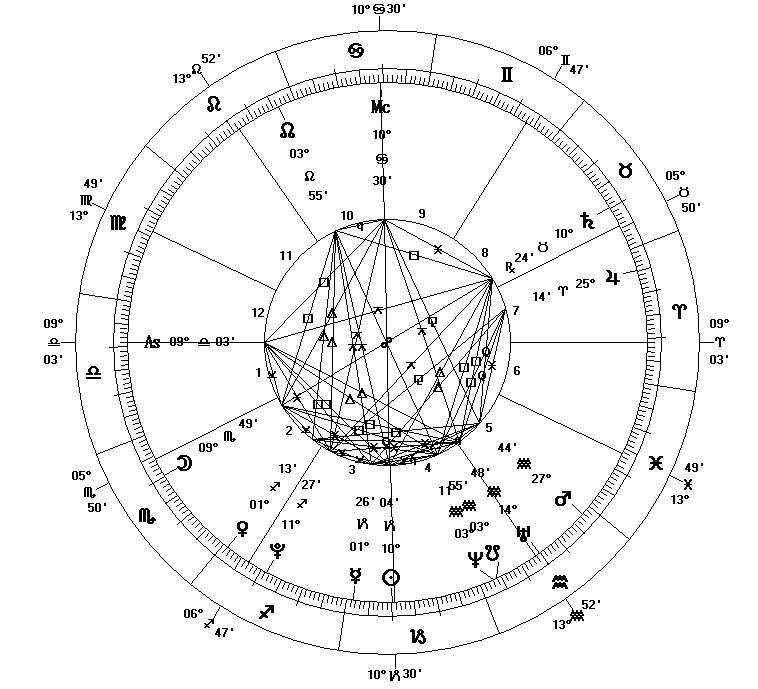
Neptune in the Third House: Meaning and Traits
Photo: Wikimedia Commons (CC BY-SA 3.0)
Birth Charts

Neptune in the Third House: Meaning and Traits

Manishankar4 min read

Neptune in the third house is read as the planet of dreams, compassion and soft edges meeting the mind's daily traffic. In Western astrology, the third house covers communication, siblings, neighbors, short journeys and early learning. Neptune's placement there is said to color how a person talks, listens, writes, studies and moves through their immediate world. It is a lens for reflection rather than a verdict, and it is not good or bad on its own.

How Neptune in the Third House Is Read

Astrologers approach Neptune in the third house by combining the planet's themes with the house's territory. Neptune is associated with imagination, idealism, compassion and the blurring of boundaries. The third house is a cadent house naturally tied to Gemini, the sign of quick exchange and local curiosity. Put together, the placement is read as imagination and idealism flowing into communication, siblings, neighbors, short journeys and early learning.

Method matters here. Neptune moves slowly, so its sign is shared by an entire cohort born around the same time. Its house is the personal part of the placement, which is why an accurate birth time matters. If the time is off, the house cusp can shift and the placement may not hold at all. Astrologers also read the whole chart rather than one factor in isolation, so this placement is never interpreted alone. Related coverage on the third house and on Neptune as a planet can help put the pieces together.

What the Placement Is Said to Bring

The strong expression

At its best, Neptune in the third house is read as a poetic mind. Speech and writing may carry imagery and metaphor easily. The person is often described as tuned in to what is said between the lines, picking up mood and subtext before words catch up. Astrologers associate this with a soft, receptive way of listening, a gift for storytelling, and a natural sympathy for siblings, neighbors or classmates. Short journeys may be read as quietly restorative, and early learning as something absorbed through atmosphere and feeling rather than rigid instruction.

The challenging expression

The same sensitivity has a shadow side in how astrologers read it. Boundaries around facts can blur: messages get missed, details slip, and a person may hear what they hoped to hear rather than what was said. Neptune's fog is sometimes read as idealizing a sibling or neighbor, then feeling let down when reality does not match the picture. It can also describe avoidance of plain, direct conversation in favor of hints and silence. None of this is treated as fixed. It is a set of tendencies a chart holder might recognize and work with.

Modifiers: Cusp Sign and Aspects

The sign on the third house cusp is read as the tone of the placement. A water-sign cusp is said to deepen the emotional pull of communication, an air-sign cusp to heighten the mental and verbal focus, and an earth-sign cusp to pull Neptune's dreaminess toward practical, grounded messages. The sign Neptune itself occupies matters too, but because it is shared by a cohort, astrologers lean on the house and its ruler for the personal reading. The planet's broader meaning is covered in our guide to Neptune's role in the chart.

Aspects modify the effect. A flowing aspect to the Moon or Mercury is often read as a compassionate, articulate imagination. A harder aspect from Saturn or Mars may be read as friction between structure and drift, or between directness and evasion, which can sharpen the person's need for clarity. A strong aspect from Jupiter is sometimes described as widening the storytelling gift, with a risk of overstatement. A trine or sextile from Venus may soften the tone and add charm to the way words land. For background on how astrologers weigh aspects, Astrology.com's aspect overview is a useful primer, and Britannica's entry on astrology offers historical context on the tradition these readings come from.

Reflecting on the Placement

Astrologers who work with Neptune in the third house often suggest it rewards simple, practical habits: confirming details in writing, naming feelings directly rather than hinting, and noticing when a conversation has drifted into fantasy. Siblings, neighbors and short trips may be read as a recurring classroom for learning where the self ends and another person begins. If communication difficulties feel heavy or persistent, a qualified counselor is the right resource. Astrology is best kept as a reflective and entertaining lens rather than a guide to real decisions. The placement is a way of noticing patterns, not a forecast of what those patterns will do.

Today's Horoscope

November 27, 2026

All signs →

Get Your Horoscope in Your Inbox

A weekly note on your sign, the moon, and what the stars are up to. No spam, unsubscribe anytime.

We respect your privacy. Unsubscribe at any time.