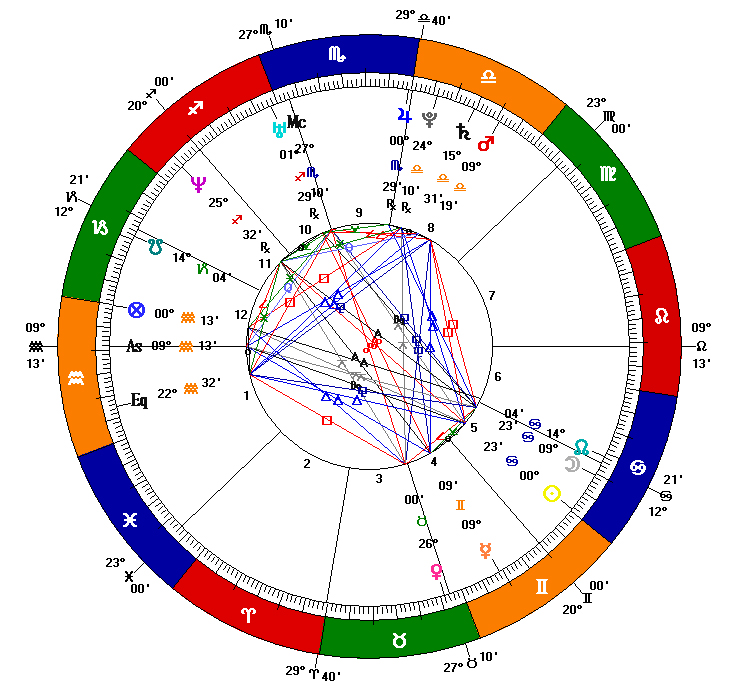
The north node in Gemini, with the south node in Sagittarius, is read in a natal chart as a pull toward curiosity, conversation, and the specifics of ordinary life. The lunar nodes are the two points where the Moon's orbit crosses the path of the Sun. They are calculated points rather than bodies, and the south node always sits exactly opposite the north, so the pairing is built into the geometry. Astrologers treat the nodes as a symbolic axis rather than a forecast: the south node describes habits that feel familiar, and the north node points toward qualities that ask for a little more effort. Neither end is good or bad on its own.
The North Node in Gemini: A Direction of Growth
The lunar nodes stay in a sign for about eighteen months, which is one reason astrologers read them as a broad theme rather than a personal script. In this pairing, the axis runs between Sagittarius and Gemini, two signs that share an interest in ideas but approach them from opposite directions. Sagittarius reaches for the wide view; Gemini lingers over the detail. The north node in Gemini is said to mark the less practiced end of that axis, the one that asks for conscious effort, while the south node in Sagittarius describes the ground already well trodden. Western astrology treats the north node as a direction of growth, not a promise, and nothing in the chart is read as causing an outcome. The placement offers language for a pattern, not a verdict about who someone is.
What the Sagittarius South Node Is Said to Describe
In this pairing, the south node falls in Sagittarius, and astrologers read that placement as a set of comfortable defaults: big-picture thinking, a taste for the grand theory, confidence in one's own convictions, and a habit of reaching for the wide view before the details are settled. Someone with this axis might notice they default to the sweeping statement, the inspiring abstraction, or the answer that sounds right before anyone has checked it. There can be a familiar pull toward certainty, toward the sermon rather than the question. Read symbolically, the south node marks ground that is already well trodden. It is not a flaw to be corrected. It is simply the place the chart suggests a person can fall back on without trying, the reflex that arrives before any conscious choice.
What the Gemini North Node Points Toward
The north node in Gemini is read as the opposite motion: toward specifics, questions, and the daily exchange of information. Astrologers describe this as a nudge toward local curiosity - learning a neighbor's name, asking the follow-up question, reading the actual study instead of the headline, and letting understanding arrive in pieces rather than all at once. Gemini is associated with language, variety, and the willingness to hold two ideas at the same time. In this axis, those qualities are framed as a growth direction rather than a personality verdict. The suggestion is not that big ideas are wrong, but that they tend to be more useful when grounded in detail. A reader with this placement might recognize the difference between knowing a topic broadly and being able to explain it simply. For background on how the nodes are calculated, the NASA eclipse resource explains the geometry that produces these points.
Why this is framed as a direction, not a destiny
The nodes stay in a sign for about eighteen months, which means a great many people share any given nodal sign. That alone is a good argument for reading the placement as a theme rather than a script. Astrologers describe a north node as a direction of growth, not a promise. Nothing in a chart is read as causing an outcome, and the Gemini north node is not considered a better fate than its Sagittarius counterpart. The axis is a description of tension and balance, and the same person can lean toward either end on different days. The Britannica entry on the zodiac offers useful context on how the signs are traditionally described.
How the Placement Is Read in Practice
In a natal reading, the north node in Gemini usually comes up as a question of where a person's attention naturally goes and where it might be asked to go instead. Astrologers often look at the house holding the north node to see which area of life the growth theme touches, and at planets aspecting it for texture. The south node in Sagittarius is typically discussed alongside it, since the two are inseparable in the geometry. The south node gets read as the comfortable reflex, the north node as the less practiced skill. This is why the placement is rarely described as a fixed trait. It is more like an invitation to notice which end of the axis you are standing on. Someone with this axis might find the most useful framing is balance, not replacement - bringing Gemini's questions to Sagittarius's convictions rather than trading one for the other.
Astrology of this kind is a mirror for self-reflection and entertainment. It is not a basis for decisions about health, money, or anything else with real stakes; for those, a qualified professional is the right conversation. Related coverage on the nodes in other signs and on the sign of Gemini explores these themes further.
The north node in Gemini is best understood as a compass point rather than a destination: a reminder that curiosity, specificity, and the willingness to ask can be practiced, and that growth is read as a direction rather than a verdict.