The North Node in Taurus: A Direction of Growth
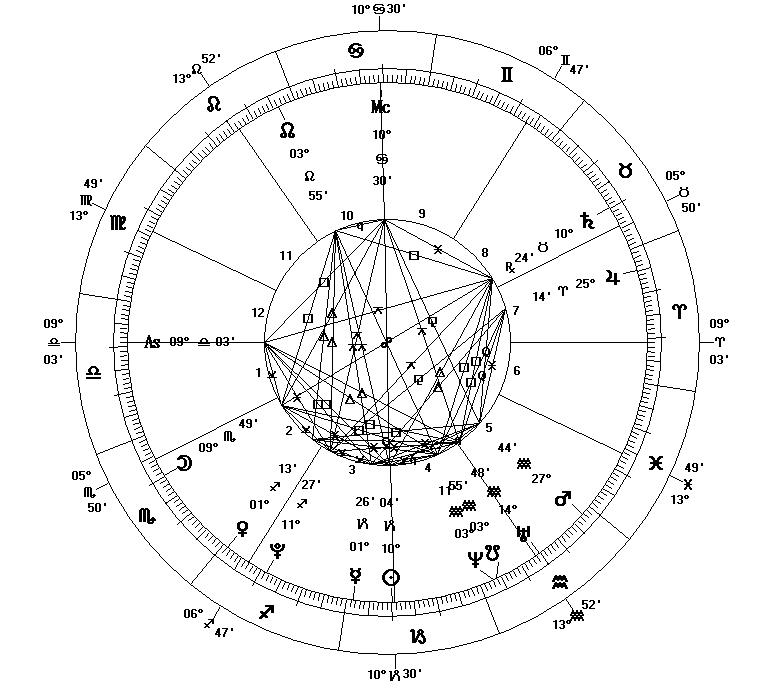
The lunar nodes are not planets. They are the two calculated points where the Moon's orbit crosses the Sun's path, and they always sit exactly opposite each other. When the north node is in Taurus, the south node is in Scorpio. Astrologers read that axis as a story about where you have been and where you are being nudged to go, and they read it as a direction rather than a destiny.
How Astrologers Read the Nodal Axis
What the Nodes Are Said to Describe
Because the nodes are measured points rather than bodies, astrologers treat them as more symbolic than the planets. The nodes move through a sign in about eighteen months, so anyone born within the same window shares the same nodal axis, sometimes in different houses. That shared quality is part of why the placement is read as a theme rather than a personal signature.
In that reading, the south node describes habits, reflexes and comforts that feel like home. The north node points the other way: toward qualities that may feel unfamiliar, even clumsy at first, and that are said to round out the chart over time.
The traditional framing is that the south node is not a punishment and the north node is not a prize. Astrologers describe the south node as a skill you already have, sometimes overused. The north node is described as a skill you are still learning. Sky watchers tracking the Moon's path will recognize the nodes as the crossing points tied to eclipse seasons, which is why they carry such weight in symbolic reading even though nothing is physically there. You can read more about how the nodes are defined at NASA's eclipse overview.
The placement is read as growth, not fate. Nothing in the chart is said to guarantee an outcome, and no node is good or bad on its own. A sign is a set of qualities, and any set of qualities can be expressed well or badly.
South Node in Scorpio: The Familiar Ground
With the south node in Scorpio, astrologers often describe someone who knows how to go deep. Scorpio is associated with intensity, privacy, investigation, emotional truth-telling and a certain comfort with what other people avoid.
What It Can Look Like
The south node is said to show where things come easily. With Scorpio here, that might mean a talent for reading a room, for keeping a secret, for staying calm in a crisis, or for getting to the bottom of something nobody else wanted to touch.
The shadow side is described just as often. That same skill can tip into control, suspicion, holding on too long, or treating every relationship as something to be managed. Astrologers tend to frame this as a habit rather than a flaw: a strength that has quietly stopped being useful.
It can also show up as a pull toward drama, or toward the kind of intensity that feels meaningful but leaves little room for rest. The south node is never read as something to discard. It is the ground you already know how to stand on, which is exactly why growth tends to point elsewhere.
North Node in Taurus: The Direction of Growth
Taurus is associated with steadiness, the body, resources, patience, pleasure and the plain fact of having needs. With the north node here, astrologers read the growth edge as learning to be simple, present and settled.
That can mean building something that lasts instead of chasing the next intense thing. It can mean trusting what is ordinary: a routine, a meal, a garden, a savings habit, a friendship that does not require crisis to feel real.
Where It Shows Up
In a natal chart, the house holding the north node suggests where that Taurus learning plays out, and the house holding the south node shows where the old Scorpio reflex tends to surface first. Astrologers read the pair together rather than separately.
The growth is usually described as slow and unglamorous. Taurus does not reward urgency. The reading suggests that the way forward is often the more boring choice, made repeatedly, rather than the more dramatic one.
Because the nodes move in roughly eighteen-month cycles, the same axis returns to the same place about every nineteen years. Astrologers sometimes describe that return as a checkpoint, a moment to notice how the theme has been handled so far. It is read whenever it happens, not as a one-time event.
Living With the Axis
The useful way to hold this placement is as a question rather than an answer. Where are you comfortable going deep, and where would steadiness serve you better? The chart does not decide that. It just names the tension.
Astrologers who work with the nodes tend to emphasize that both ends of the axis matter. The south node is not something to abandon; it is a resource. The north node is not a command; it is a direction. A balanced reading treats them as a conversation.
If a placement like this raises something that feels bigger than reflection, that is a good moment to talk with a qualified professional rather than to lean on the chart. Astrology here is a mirror for self-reflection, not a forecast, and the reading is always yours to test against your own life.
The north node in Taurus is, in the end, one small piece of a much larger chart. It describes a lean, not a life.