
Planet Transit Times: How Long to Circle the Chart
Astrology Basics

Planet Transit Times: How Long to Circle the Chart

How long each planet takes to circle the chart: orbital periods for astrology, from the Moon's month to Saturn's decades, in a calm, clear overview.

Jaysurya5 min read
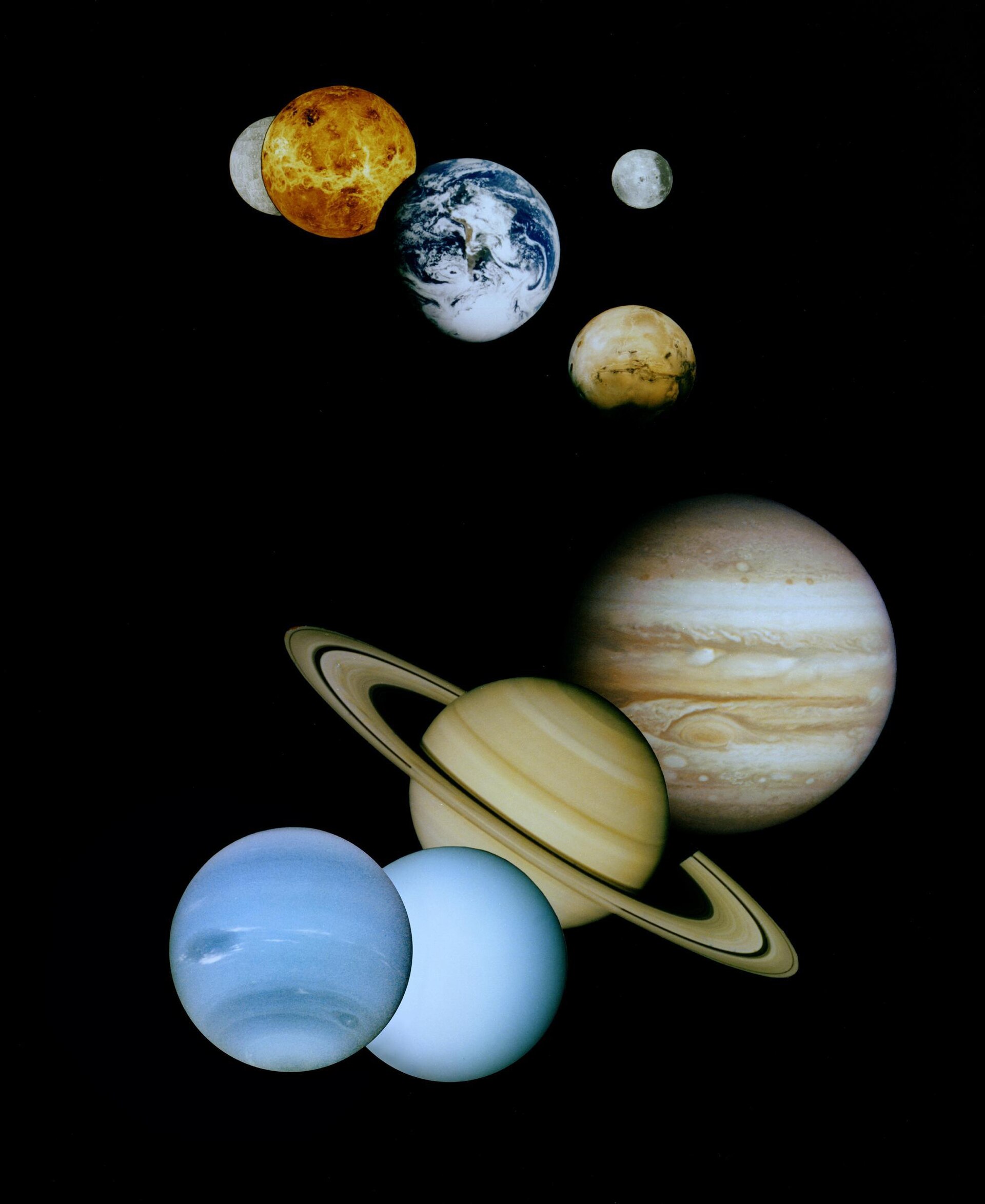
Photo: NASA / Wikimedia Commons (Public domain)

In Western astrology, the time a planet takes to complete one full orbit around the Sun - and therefore around your birth chart - shapes how astrologers read its influence. Fast-moving bodies like the Moon shift your daily mood, while slow ones like Pluto mark generational eras. Here is a clear breakdown of each cycle and what it means for your personal horoscope.

The Fast Players: Moon, Sun, Mercury, and Venus

These four bodies move quickly through the zodiac. That speed is why astrologers tie them to personal, day-to-day themes rather than long-term shifts.

The Moon is the swiftest, finishing its full circuit in about 27 to 28 days. Because it returns to the same sign each month, it is said to mirror your immediate emotional weather, instincts, and habits. As the Moon enters a new sign every two and a half days, readers often describe subtle shifts in your inner mood or the way you converse.

The Sun takes roughly one year to circle the chart, spending about 30 days in each sign. This cycle defines your core identity and vitality. Each year, when the Sun returns to the exact degree it held at your birth, astrologers call it a solar return - a symbolic personal new year for setting intentions around self-expression.

Advertisement[SIDEBAR_RIGHT_2]

Mercury completes its orbit in about 88 days, or roughly three months, though retrogrades can make it seem to linger. On average, it spends about three and a half weeks per sign. Its cycle governs communication, logic, and daily logistics, so its quicker rhythm reads as a nudge to adapt and exchange ideas.

Venus takes about 225 days, or roughly seven and a half months, to finish one loop, spending three to four weeks in each sign. Astrologers connect Venus to values, love, and aesthetics. Because it moves more slowly than Mercury, its transits are said to carry extra weight in matters of the heart and personal taste, though still within a single-year frame.

The Middle Runners: Mars and Jupiter

These planets sit between personal and social in pacing. Their cycles are read as marking effort and growth.

Mars takes about two years to circle the chart, spending roughly six to seven weeks in each sign. As the planet of drive and action, its two-year cycle is said to define your energy style in phases. When Mars enters a new sign, astrologers note a shift in how you chase goals or handle conflict. Its return to your natal position every two years is sometimes read as a moment to reassess ambition.

Advertisement[SIDEBAR_RIGHT_6]

Jupiter takes about 12 years to complete one full orbit, spending about one year in each sign. Astrologers call it the planet of expansion, luck, and meaning. Its year-long passage through a sign is said to color your opportunities and worldview for an entire chapter of life. Since it returns to your birth position roughly every dozen years, readers view it as a cycle of growth milestones - around ages 12, 24, 36, and beyond.

The Slow Generational Bodies: Saturn, Uranus, Neptune, and Pluto

These outer planets move so slowly that they are interpreted primarily as generational markers. Yet their transits can still touch your personal chart in rare and significant ways.

Saturn takes about 29 years to circle the chart, spending roughly two and a half years in each sign. Its cycle is tied to discipline, structure, and responsibility. The famous Saturn return - when it comes back to its natal spot around ages 29 and 58 - is read as a coming-of-age moment for adult commitment. Because Saturn crosses each house of your chart for about two and a half years, it is said to bring patient lessons to specific life areas.

Uranus takes about 84 years, spending roughly seven years per sign. Its cycle is associated with innovation, sudden change, and individuality. Most people will only see Uranus move through three or four signs in a lifetime, so its passage over a sensitive point in your chart is a rare event, read as an invitation to break from routine. Its return near age 84 is seldom experienced, making it more a collective marker than a personal one.

Advertisement[SIDEBAR_RIGHT_7]

Neptune takes about 165 years, resting about 14 years in each sign. It governs imagination, dreams, and dissolution. Its orbit is so long that it defines entire eras rather than personal timelines. When its transits do touch a natal point, they are said to blur boundaries and spark creative or spiritual questioning. If health or financial worries arise during such a transit, a licensed professional is the right resource - astrology here is for reflection, not guidance on those decisions.

Pluto takes about 248 years, spending anywhere from 12 to 30 years in a single sign depending on its elliptical orbit. It symbolizes transformation, power, and deep renewal. In practice, no one lives to see a full Pluto cycle, so its influence is always generational. When Pluto crosses a personal angle in your chart - a rare event happening only once or twice in a lifetime - astrologers read it as a period of profound metamorphosis that outlasts any single year.

Understanding these rhythms helps you see why some transits feel familiar and recurring, while others arrive as once-in-a-lifetime turning points. The Moon nudges you daily, while Pluto reshapes the era you were born into. Between those extremes, each planet offers a different interval for reflection, so you can read your chart with a sense of scale rather than urgency.

For deeper context on how these cycles interact with your personal placements, you can explore related articles on solar returns, Saturn returns, and generational markers in your chart. If you want to verify the astronomical data behind these cycles, NASA's planetary fact sheets offer reliable orbital figures, and the International Astronomical Union provides authoritative resources on planetary motion.

Today's Horoscope

September 24, 2026

All signs →

Get Your Horoscope in Your Inbox

A weekly note on your sign, the moon, and what the stars are up to. No spam, unsubscribe anytime.

We respect your privacy. Unsubscribe at any time.