
Solar and Lunar Eclipses: Mechanics and Meaning
Moon

Solar and Lunar Eclipses: Mechanics and Meaning

Learn how solar and lunar eclipses work, then explore what astrologers say they mean for reflection and personal growth.

Hemeswari5 min read
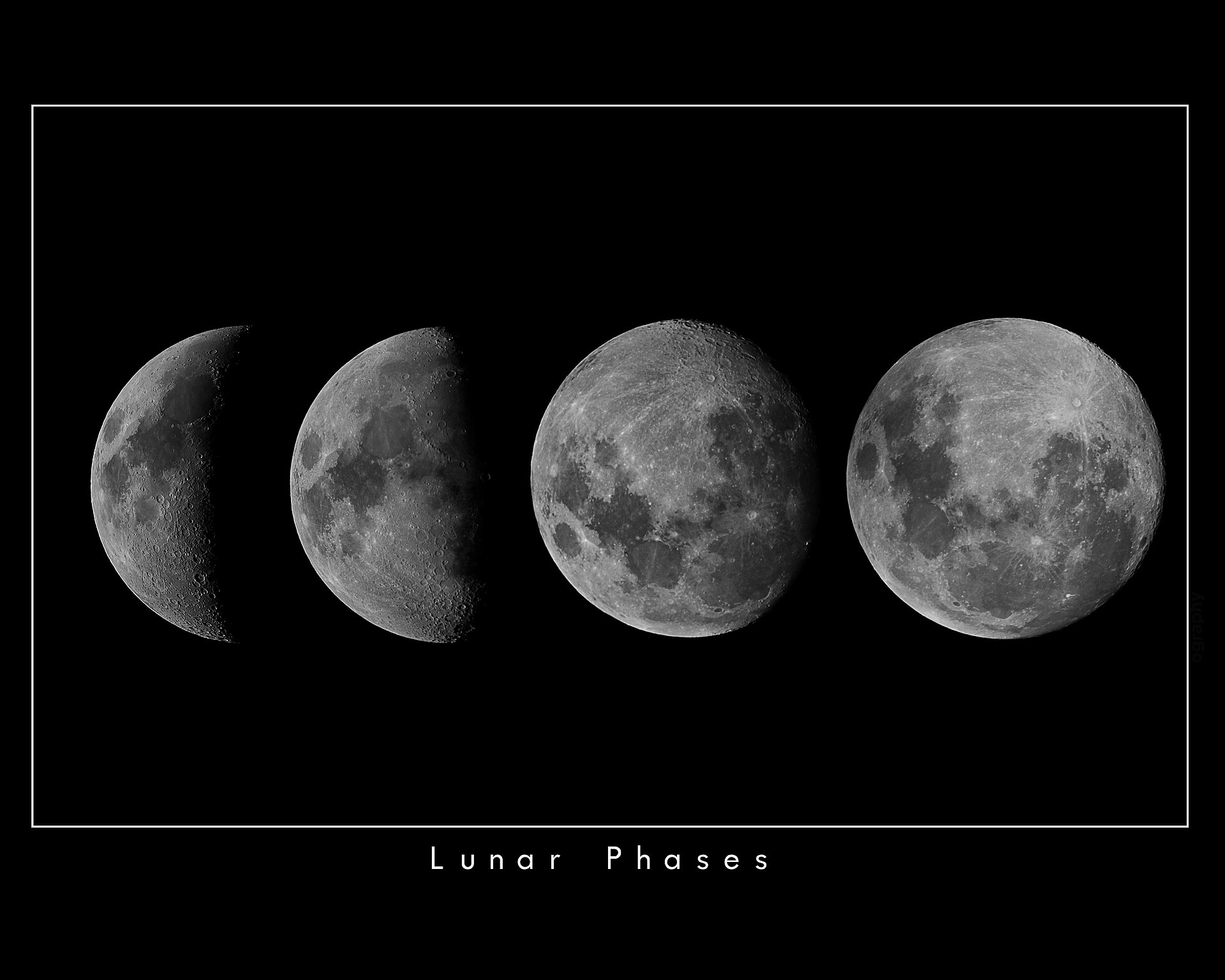
Photo: David Warrington from England / Wikimedia Commons (CC BY 2.0)

Every few months, the Sun, Moon, and Earth line up just right to create an eclipse - a moment when the sky seems to pause. Astronomers see a predictable dance of shadows. Astrologers read something else entirely: a scene of heightened symbolism, said to mark beginnings and endings out of proportion to a typical new or full moon. This guide separates the mechanics from the meaning, so you know what is actually happening overhead and how it has long been interpreted for reflection. By understanding the science first, you can approach the astrological layer with clearer eyes and a calmer mind, ready to use the moment for your own contemplation rather than expectation.

The Mechanics: Why Eclipses Come in Seasons

A solar eclipse occurs when the Moon passes directly between the Sun and Earth, casting its shadow on our planet. A lunar eclipse happens when Earth is between the Sun and the Moon, and our planet's shadow falls across the lunar surface. Yet if these alignments were enough, we would see an eclipse every month. We do not, because the Moon's orbit is tilted about five degrees relative to Earth's path around the Sun, as explained by NASA's eclipse resources.

Advertisement[SIDEBAR_RIGHT_2]

Eclipses only take place when the new or full moon occurs near one of the two lunar nodes - the points where the Moon's orbit crosses the ecliptic, the Sun's apparent path through the sky. When the Moon is near a node, it is perfectly lined up for a shadow event. That is why eclipses arrive in clusters known as eclipse seasons, typically two or three events spread over a few weeks, roughly twice a year. Between seasons, the Moon passes above or below the line of sight and no eclipse occurs.

Solar eclipses come in three main types. A total solar eclipse happens when the Moon fully covers the Sun's disk from our viewpoint, briefly revealing the outer corona. An annular solar eclipse occurs when the Moon is farther from Earth in its orbit, so it appears smaller and leaves a bright ring, or annulus, of sunlight around its edge. A partial solar eclipse is what you see from locations outside the path of totality or annularity, where the Moon covers only part of the Sun.

Lunar eclipses also vary. A total lunar eclipse turns the Moon a deep red or copper tone, sometimes called a blood moon, as Earth's atmosphere bends and filters sunlight into its shadow. A partial lunar eclipse darkens only a portion of the Moon. Less dramatic is a penumbral lunar eclipse, where the Moon passes only through Earth's faint outer shadow, causing a subtle shading that is easy to miss entirely. Note that while lunar eclipses are safe to watch with the naked eye, solar ones are not. Never look directly at the Sun during any phase of a solar eclipse without certified eclipse glasses or a proper solar filter - eye damage can occur without warning, so plan ahead with trusted viewing equipment.

Advertisement[SIDEBAR_RIGHT_6]

The Astrological Meaning: Reading the Eclipse Point

Astrologers do not treat every eclipse identically. The meaning is said to hinge on the specific degree, sign, and house where the eclipse falls in a personal birth chart. The eclipse point acts as a focal lens, drawing attention to that area of life for months afterward. For example, an eclipse in the second house might be described as stirring themes of finances or self-worth, while one in the seventh house could bring relationships into sharper focus. This is not a prediction of what will happen, but a prompt to notice what is surfacing in your own experience.

A solar eclipse occurs at a new moon, and astrologers read it as a symbolic "planting season" - a time associated with new intentions, initiatives, or fresh starts that unfold over roughly six months. A lunar eclipse at a full moon is often read as a "harvest" or a release point, connected with culmination, emotional clarity, or letting go of what has run its course. In both cases, astrologers often advise reflecting on the theme of the house and sign involved, journaling about recurring thoughts, and watching for patterns over the weeks that follow.

Advertisement[SIDEBAR_RIGHT_7]

The nodes themselves carry additional weight in interpretation. Some astrologers associate the north node with growth and the south node with comfort or karmic release, so an eclipse near one or the other is said to color whether the emphasis leans toward forward momentum or closure. The aspect between the eclipse and planets in a birth chart - whether it aligns, opposes, or squares - is also read as strengthening or complicating the theme. A skilled astrologer can map this geometry, but even without a chart, any eclipse is typically framed as a moment to slow down and observe, not to make impulsive decisions.

How to Use an Eclipse Season for Reflection

Because eclipse energy is often described as intense or fateful, the common guidance is to avoid forcing major choices during an eclipse window itself. The days just before and after are sometimes viewed as too charged for clear judgment, though astrologers differ on the exact range. A measured approach is to let the theme reveal itself. If an eclipse falls in your sign or a prominent house, treat it as an invitation to clarity, not a command to act. You might write down what you notice in your relationships, work, or inner life, then revisit those notes at the next eclipse season.

Today's Horoscope

September 24, 2026

All signs →

Get Your Horoscope in Your Inbox

A weekly note on your sign, the moon, and what the stars are up to. No spam, unsubscribe anytime.

We respect your privacy. Unsubscribe at any time.