
Synastry: How Astrologers Compare Two Charts
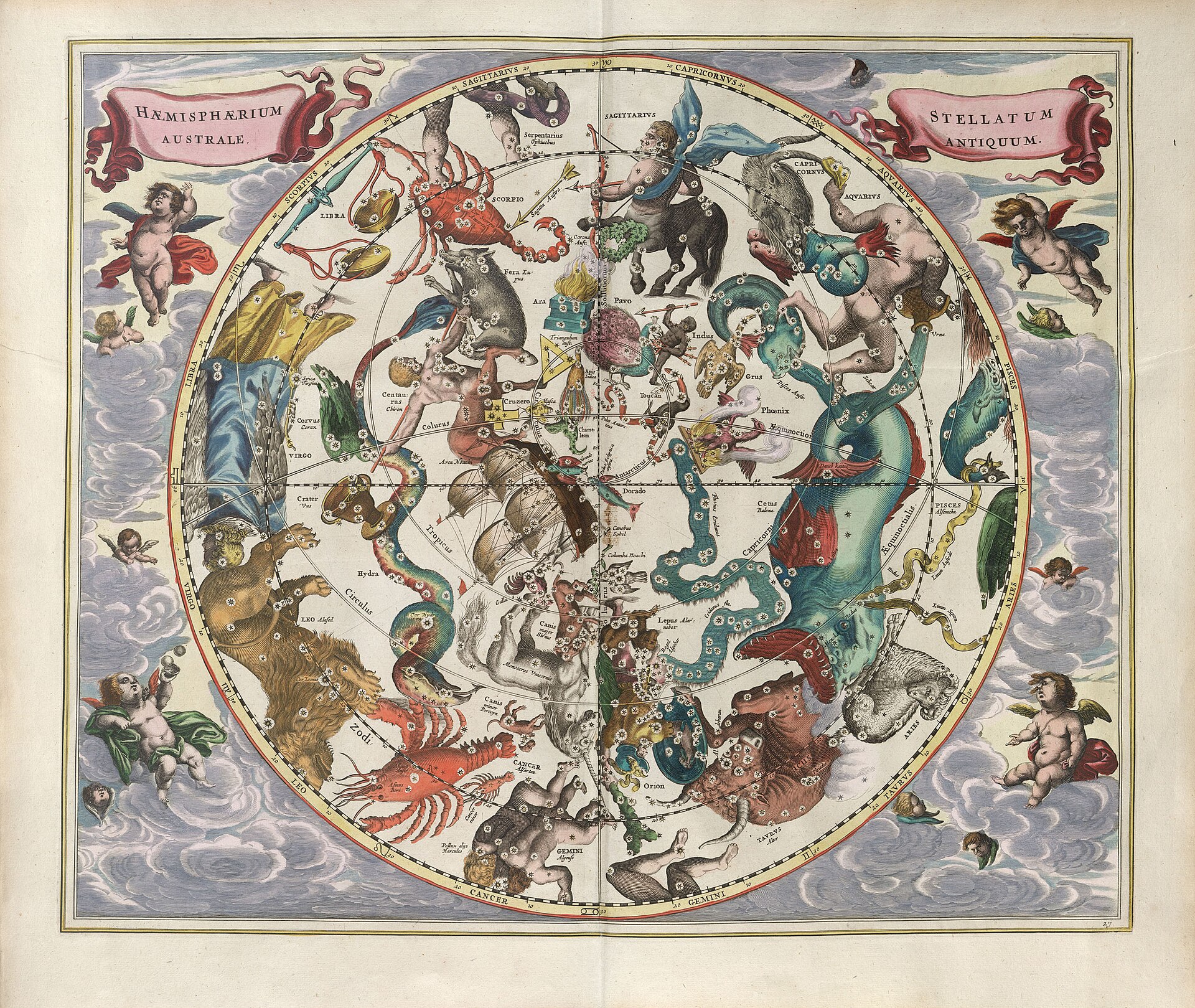
Photo: Andreas Cellarius / Wikimedia Commons (Public domain)
Love

Synastry: How Astrologers Compare Two Charts

Discover how astrologers compare two birth charts in synastry, revealing compatibility and connection through planetary aspects.

Jaysurya4 min read

Synastry: How Astrologers Compare Two Charts

Synastry is the branch of astrology that lays two birth charts over each other and reads the contacts between them - which planets in one person's chart meet planets in the other's, which houses they fall into, and what angles they form. Astrologers use it as a reflective tool, not a prediction, to explore how two people might experience each other's emotional styles, drives, and ways of relating. The method is descriptive, offering a language for patterns that may already be visible in a relationship, and it works best when treated as conversation rather than verdict.

What Synastry Looks For

The core of synastry is the aspect grid between the two charts. When one person's Venus meets the other's moon, for example, astrologers read that as a warm, intuitive bond where affection and emotional needs speak the same language. Venus contacts generally describe what each person finds pleasing, attractive, or worth nurturing in the other. Moon contacts go deeper, touching habits, comfort zones, and unspoken moods. A moon-moon conjunction is often described as a sense of instant familiarity - two people who seem to know how the other feels before a word is spoken.

Advertisement[SIDEBAR_RIGHT_2]

Mars contacts are read differently. They point to energy, desire, and how conflict or initiative flows between two people. A Mars-Venus contact is the classic chemistry marker - not necessarily romantic, but charged with attraction and pursuit. Mars-Moon contacts can be passionate but heated, suggesting a push-pull where one person's drive meets the other's sensitivity. Astrologers look at these not as good or bad labels, but as textures: what is easy, what is stimulating, what requires conscious handling.

The ascendant is another key point. When one person's planet lands near the other's ascendant, it is said to color the first impression and the way they present themselves to each other. A partner's sun or Venus on your ascendant can feel like being truly seen, as if they bring out a version of you that is bright and confident. The ascendant acts as a doorway, and whatever touches it is thought to shape the relational atmosphere more strongly than many other contacts.

Why Hard Aspects Matter

A common misconception is that harmonious aspects - trines and sextiles - make a better relationship than hard ones like squares and oppositions. Astrologers often read the opposite. Hard aspects show friction, yes, but friction is what forces growth, negotiation, and honest expression. A moon square Venus, for instance, might mean one person needs emotional validation while the other wants to please in a way that misses the mark. That tension, when acknowledged, becomes a reason to talk rather than a reason to leave.

Advertisement[SIDEBAR_RIGHT_6]

Long-term relationships nearly always have a mix of both. Easy aspects create comfort, but they can also lead to complacency. Hard aspects keep things alive and demanding - they ask each person to stretch beyond their default responses. A synastry reading that shows only challenges is not a warning to separate; it is an invitation to understand where patience and repair will be needed. Astrologers frame these as themes you may encounter, not outcomes you must accept.

The houses are equally important. If one person's Venus falls in the other's seventh house of partnership, the connection is read as having a strong one-on-one quality. If it falls in the tenth, it might feel more public or career-oriented. The same planet in a different house changes the story entirely, which is why synastry always pairs aspects with placement.

Composite Chart as a Different Lens

Synastry is often confused with the composite chart, but they are separate techniques. Synastry compares two charts point by point. A composite chart, by contrast, is a single chart drawn from the midpoint of each corresponding planet - it represents the relationship itself as an entity with its own style and rhythm. Where synastry asks "How do these two people interact?" the composite asks "What is this bond like when considered on its own?"

Advertisement[SIDEBAR_RIGHT_7]

Astrologers use both, but for different questions. Synastry is excellent for spotting individual dynamics: who initiates, who comforts, where the friction lives. The composite offers a broader, more neutral portrait of the relationship's character, free of any one person's perspective. Many readers will look at both together, using synastry for detail and the composite for the overall mood.

If a synastry reading brings up deep personal concerns - around trust, attachment, or repeated relational patterns - it can be useful to talk them through with a counselor or therapist, who is trained to work with those dynamics in a practical way. Astrology does not replace that kind of support. But as a reflective mirror, synastry gives you a vocabulary for what you may already sense: the ease, the pull, and the places where two people meet in the middle.

Today's Horoscope

September 24, 2026

All signs →

Get Your Horoscope in Your Inbox

A weekly note on your sign, the moon, and what the stars are up to. No spam, unsubscribe anytime.

We respect your privacy. Unsubscribe at any time.