
The Four Astrology Angles Explained
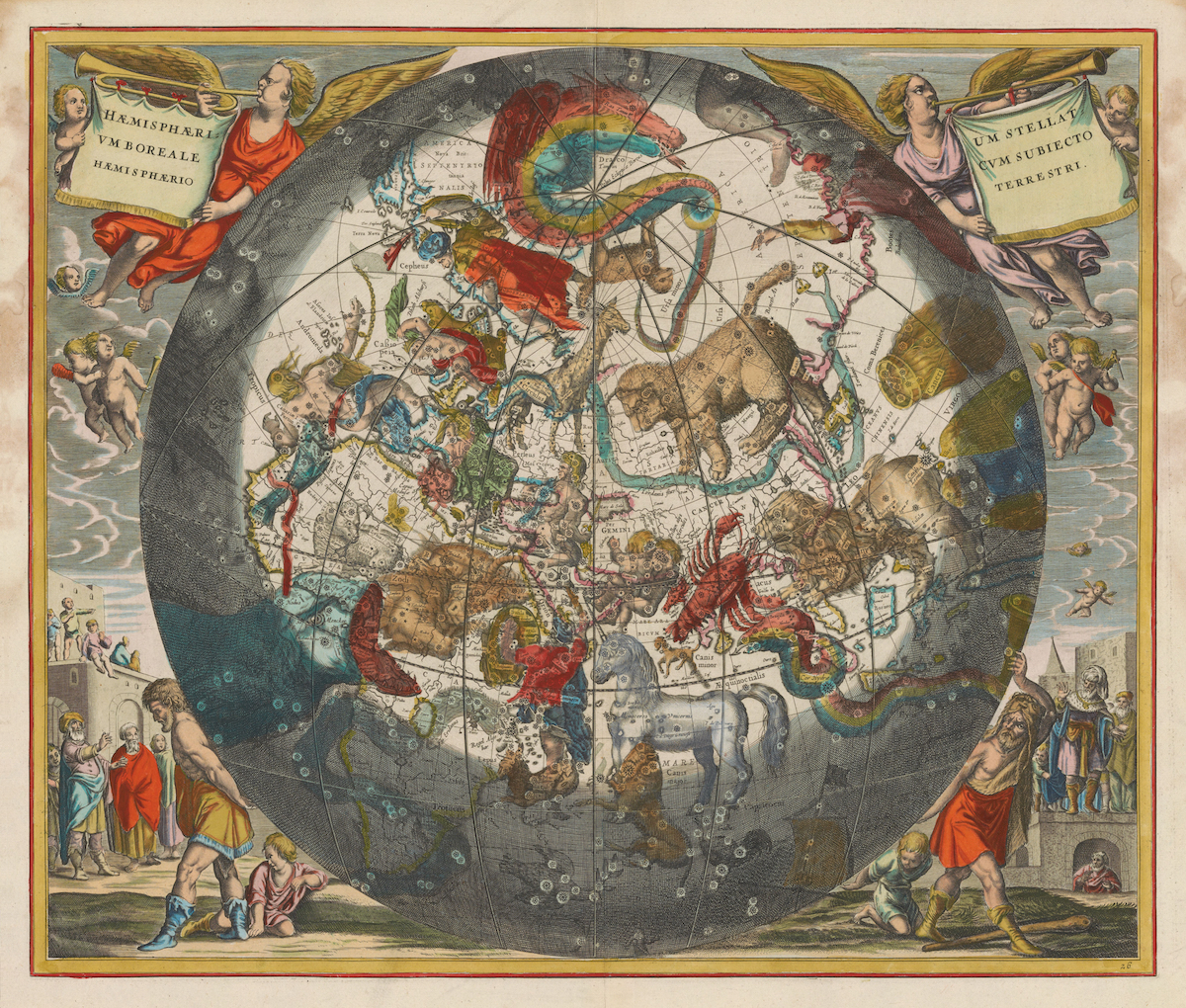
Photo: Andreas Cellarius / Wikimedia Commons (Public domain)
Astrology Basics

The Four Astrology Angles Explained

Learn how the ascendant, descendant, midheaven, and IC shape your personality, relationships, and life path in astrology.

Hemeswari4 min read

The Four Angles: Ascendant, Descendant, Midheaven and IC

The four angles form the structural cross that an entire birth chart hangs on. Astrologers treat them as the most personal points in any horoscope because, unlike the Sun, Moon, or planets, they depend on the exact time and place of birth rather than the date. These points are the eastern horizon, known as the ascendant; the western horizon, the descendant; the top of the chart, the midheaven; and the bottom, the IC, or imum coeli. In Western astrology, each angle anchors a distinct layer of life: how you approach the world, how you meet others, your public role, and your private foundation. When a planet sits close to any angle, its energy is traditionally read as amplified in that sphere. This structure works best as a mirror for self-reflection, not a fixed script, offering language to notice patterns rather than receive predictions.

Advertisement[SIDEBAR_RIGHT_2]

The Ascendant and the Descendant: The Horizon Axis

The ascendant, frequently called the rising sign, is the sign climbing over the eastern horizon at the moment of birth. Astrologers read it as the first impression you make, your instinctive reaction to new situations, and the persona you show before anyone knows you well. Someone with an Aries ascendant is said to come across as direct and energetic, while a Libra ascendant may present as agreeable and thoughtful. More than a simple veneer, the ascendant sets the tone for the whole chart because the twelve houses are numbered from it, making it the doorway into how you engage with daily life.

Opposite the ascendant sits the descendant, the sign setting on the western horizon. If the ascendant describes the self you lead with, the descendant concerns the other. It is traditionally read as the kind of partner you feel drawn to, the qualities you seek in close one-on-one bonds, and the blind spot you tend to project onto someone else. A Cancer descendant might point toward nurturing, sensitive partners, while a Capricorn descendant could suggest you match best with someone responsible or ambitious. Along the horizon axis, the two work as a balance: what you initiate with, and what you hope connection will complete.

Advertisement[SIDEBAR_RIGHT_6]

The Midheaven and the IC: The Vertical Axis

The midheaven, or MC, marks the highest point in the chart, where the ecliptic crosses the southern meridian in most Western house systems. Astrologers read it as your public standing, your career direction, and the reputation you accumulate over time. The sign occupying the midheaven, along with any planets near it, is said to describe how the wider world sees you and what kind of contribution feels genuinely meaningful. A Leo midheaven, for instance, might suggest a visible, creative professional path, while a Virgo midheaven could point toward a role built on precision and service. This angle is often the first stop in discussions of vocation, though astrologers frame it as tendency rather than destiny.

At the very bottom of the chart, opposite the midheaven, lies the IC, or imum coeli, Latin for the "bottom of the sky." Traditionally, this angle anchors your private foundation: home, family roots, the inner emotional base, and the quiet place you return to once public life settles. The midheaven faces outward; the IC turns inward. A Cancer IC may suggest a strong attachment to home and family history, whereas an Aquarius IC could point to an unconventional or independent private life. Together, the vertical axis pairs outer ambition with the inner need for grounding.

Advertisement[SIDEBAR_RIGHT_7]

Why Angles Are Read as Powerful Points

In astrological practice, angles carry weight beyond marking house cusps. They are considered sensitive intersections where the sky meets the earth at your specific time and place. A planet conjunct an angle is said to have its energy pulled into that area of life with unusual visibility or urgency. Near the ascendant, its qualities become obvious in your personality; near the midheaven, they move to the center of career and reputation.

The angles also shift fast - roughly one degree every four minutes - which is why accurate birth time matters so much. Two people born the same day an hour apart can hold entirely different rising signs and, by extension, different charts. Astrologers frequently check the angles first when verifying a birth time, since they frame the entire circle and everything inside is read in relation to them. The American Federation of Astrologers emphasizes that precise birth data is essential for angle calculations, underscoring their role as the chart's backbone. Treat the angles as a starting point for reflection rather than a predetermined outcome. They give you a language for how you meet the world, choose partners, build a public life, and root yourself at home.

Today's Horoscope

September 24, 2026

All signs →

Get Your Horoscope in Your Inbox

A weekly note on your sign, the moon, and what the stars are up to. No spam, unsubscribe anytime.

We respect your privacy. Unsubscribe at any time.