Venus Conjunct Mars in the Birth Chart, Explained
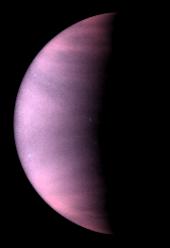
Photo: NASA/JPL / NASA (Public domain)
Love

Venus Conjunct Mars in the Birth Chart, Explained

Venus conjunct Mars in a birth chart blends desire and affection; learn how astrologers read this charged pairing of love and drive.

Jaysurya4 min read

What a Venus Conjunct Mars Natal Aspect Is Read to Describe

Venus conjunct Mars in a birth chart is read as a fusion of affection and desire. In Western astrology, a conjunction places two planets at roughly the same degree of the zodiac, side by side, and astrologers interpret that as the two acting as one combined force. Venus is associated with attraction, affection, values and beauty. Mars governs drive, assertion, desire and how a person pursues what they want. When the two meet in a natal chart, the placement is said to blur the line between wanting and loving. What someone finds beautiful and what someone is drawn to go after tend to arrive together.

This is the natal aspect, not a passing transit. It describes a standing feature of the chart rather than a mood that comes and goes. Astrologers reading it tend to see warmth and momentum in the same gesture: a person who likes with enthusiasm, who courts directly, or whose aesthetic tastes carry a certain physical charge. The combination is often called magnetic and uncomplicated in its wants, though that describes how the placement is read, not a promise of how anyone will behave.

It helps to hold the classical portraits side by side. Venus, in the traditional scheme, governs pleasure, harmony and the pull toward what pleases the eye and the heart. Mars governs initiative, courage and the appetite to act. Neither is read as superior, and a conjunction is not automatically easy or hard; it is a blending. The standard reference for the degrees and orbs involved is the Astro-Databank maintained by Astrodienst, where charts and planetary positions are archived for study.

Two Expressions of the Same Conjunction

Any single placement is read across a range, and astrologers generally resist calling one manifestation good and another bad.

The Smooth Expression

In its easy form, Venus conjunct Mars in a birth chart is read as charisma with follow-through. The person is said to know what they like and to move toward it without much inner argument. Affection and desire pull in the same direction, so relationships may seem straightforward: attraction is expressed, effort is made, and affection is shown through action as much as words. The placement is also linked to creative drive, a sense of style that carries energy, and the ability to make something appealing and then work to bring it into being. Astrologers sometimes describe this as a person who flirts with the same focus they bring to a project.

The Challenging Expression

In its harder form, the same fusion is read as friction. Astrologers note that Venus wants harmony and agreement while Mars wants to push and win, so the two can tug against each other from within the same point. This might be described as impatience in love, attraction that moves faster than the relationship can hold, or tension between keeping the peace and getting what one wants. It can also be read as someone who pursues beauty or pleasure with a force that surprises them. Again, these are interpretive lenses, not forecasts, and no placement is good or bad on its own.

How Orb, Sign and House Shape the Reading

The Orb

Conjunctions are read within an orb, a margin of degrees around exact alignment. A tight orb, often described as within a few degrees, is treated as more prominent in the chart; a wider orb is read as softer or more background. The exact figure matters because a conjunction is technically an angle of about 0 degrees, and the farther the two planets sit from that exactness, the more the fusion is softened. Astrologers do not agree on a single number, which is one reason two readings of the same aspect can differ. The American Federation of Astrologers notes that orb conventions vary across schools, so the reader's own chart report is always the reference point.

The Sign

The zodiac sign the conjunction falls in colors the expression. In an earth sign, the pairing may be read as steady and physical; in fire, as bold and demonstrative; in air, as verbal and socially fluent; in water, as emotionally fused and intuitive. The sign describes the style, not the strength.

The House

The house places the conjunction in a specific area of life. Venus conjunct Mars in the seventh house is read in the context of partnership, in the tenth in the context of public life and ambition, in the fifth in the context of romance and creativity. The house shows where the combined energy is said to show up most naturally.

Keeping the Reading in Perspective

Venus conjunct Mars in a birth chart is one aspect among many, and astrologers read it alongside the rest of the chart, including the ruler of the signs involved and any other aspects touching those planets. It is usually framed as a note about temperament rather than a verdict. A placement like this is entertainment and self-reflection, a way to think about how wanting and loving sit together in a life. For anything touching relationships, health or money in a concrete way, a qualified professional is the right person to consult.

Read in that spirit, the conjunction is less a fixed trait than a good question: where do what you love and what you chase meet?

Today's Horoscope

October 24, 2026

All signs →

Get Your Horoscope in Your Inbox

A weekly note on your sign, the moon, and what the stars are up to. No spam, unsubscribe anytime.

We respect your privacy. Unsubscribe at any time.