
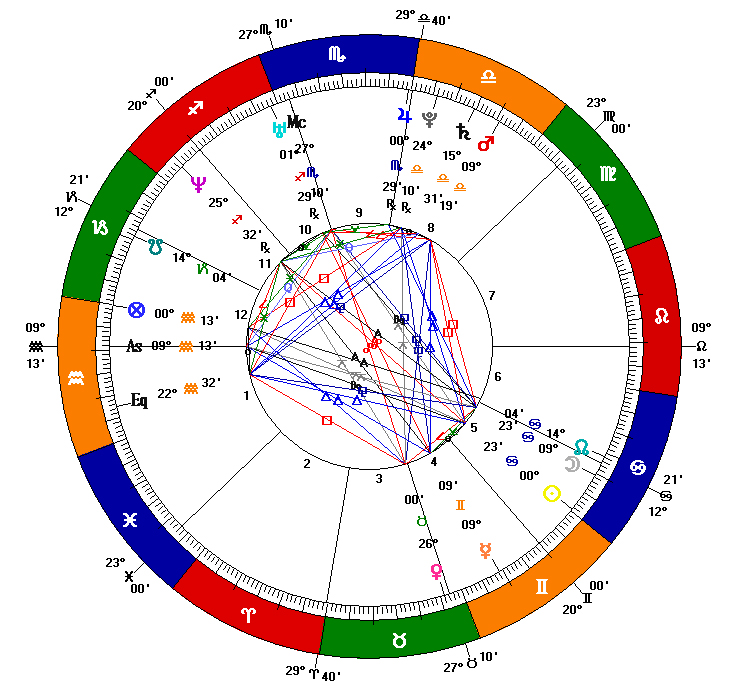
Vocation and Job in a Birth Chart: Two Questions
Photo: Wikimedia Commons (CC BY-SA 3.0)
Career

Vocation and Job in a Birth Chart: Two Questions

Bhavya4 min read

Vocation and Job Are Two Different Questions in a Chart

Most people come to a birth chart with one question: what job should I have? The answer comes back vague, and that vagueness usually gets blamed on the chart. It is not a flaw. Vocation and job are two different questions in a chart, and the chart answers them in different places. Vocation, the broad sense of direction a life is reaching toward, is read from the midheaven, the tenth house and the chart ruler. The job itself, meaning the daily conditions, colleagues, tasks and routine that fill a working week, is read from the sixth house. Earnings are a third question, and they sit in the second. Fold all three into one and the reading goes soft. Separate them and the chart starts to sound like a life.

Where Vocation Lives in the Chart

The Midheaven, the Tenth House and the Chart Ruler

The midheaven is the point at the top of the chart, the most public angle, and astrologers read it as the shape of a person's reputation and the direction their effort leans toward over time. The tenth house sits just below it and holds the same themes in more detail: visibility, authority, the version of you that gets judged in public.

Advertisement[SIDEBAR_RIGHT_2]

The chart ruler adds the personal thread. This is the planet that rules the rising sign, read as the part of the chart doing the steering. Its sign, house and condition say something about how a person moves through the world when no one is directing them. Taken together, these three describe a direction, not a title. They might suggest work that involves structure and long horizons, or work that depends on language, or work where care is the product. They do not name an industry, because a direction can be lived out in dozens of them.

Why a Chart Does Not Name an Occupation

This is where the expectation usually breaks. A chart is not a registry of careers. The same placement can be read in a teacher, a nurse, a project manager, a small business owner, or a parent running a household, because the placement describes a quality of effort rather than a payroll category.

Astrologers also work with a whole chart at once, and the midheaven is only one point in it. A single placement read in isolation will always sound generic, and that is a limitation of the method, not a hidden message. What a chart can genuinely reflect on is the texture of a working life: what kind of effort feels sustaining, what kind feels corrosive, where recognition matters, and what a person keeps returning to even when it is not rewarded.

Advertisement[SIDEBAR_RIGHT_6]

Where the Job and the Money Live

The Sixth House: Routine, Colleagues, Conditions

The job, the actual daily arrangement, is read from the sixth house. This is the house of routine, tasks, coworkers, and the small conditions that shape a weekday: whether the environment is quiet or loud, whether the work is predictable or improvised, whether the schedule leaves room for a life. When someone asks why the chart did not describe their career and then describes their office, their commute and their team, they are usually describing the sixth house without knowing it.

A vocation can be fulfilled in a job that frustrates you, and a job can be pleasant while pointing nowhere in particular. Reading the two houses side by side is what makes the picture legible.

The Second House: Earnings and Resources

Earnings sit in the second house, which astrologers read as personal resources, income and what a person considers genuinely theirs. Money is a third question, not a subset of the other two. Plenty of people earn from work that says nothing about their vocation, and plenty pursue a vocation that pays unevenly. Keeping the three separate stops the chart from being asked to do something it does not do. For anything involving pay, contracts, benefits or training costs, a qualified financial or legal professional is the right source, not a chart.

Advertisement[SIDEBAR_RIGHT_7]

Reading the Three Together

Treat the midheaven and tenth house as the long arc, the sixth as the day to day, and the second as what the work returns to you. A useful reading notices where they agree and where they pull apart: a vocation that points one way while the sixth house describes a job that supports it from the side, or a second house that funds a direction the tenth house is still building toward.

This is why vocation and job are two different questions in a chart. One asks where a life is leaning. The other asks what a Tuesday looks like. Neither cancels the other out, and neither is more true.

Use this as a reflective exercise rather than a verdict. The chart's value is narrower than most people hope and more honest than most people expect: it gives language to what you already sense about the difference between the work you do and the direction you are moving in. If you want to go further, the houses each carry their own long history worth exploring in related coverage.

Today's Horoscope

September 23, 2026

All signs →

Get Your Horoscope in Your Inbox

A weekly note on your sign, the moon, and what the stars are up to. No spam, unsubscribe anytime.

We respect your privacy. Unsubscribe at any time.