
Watching the Moon Night to Night: What Changes
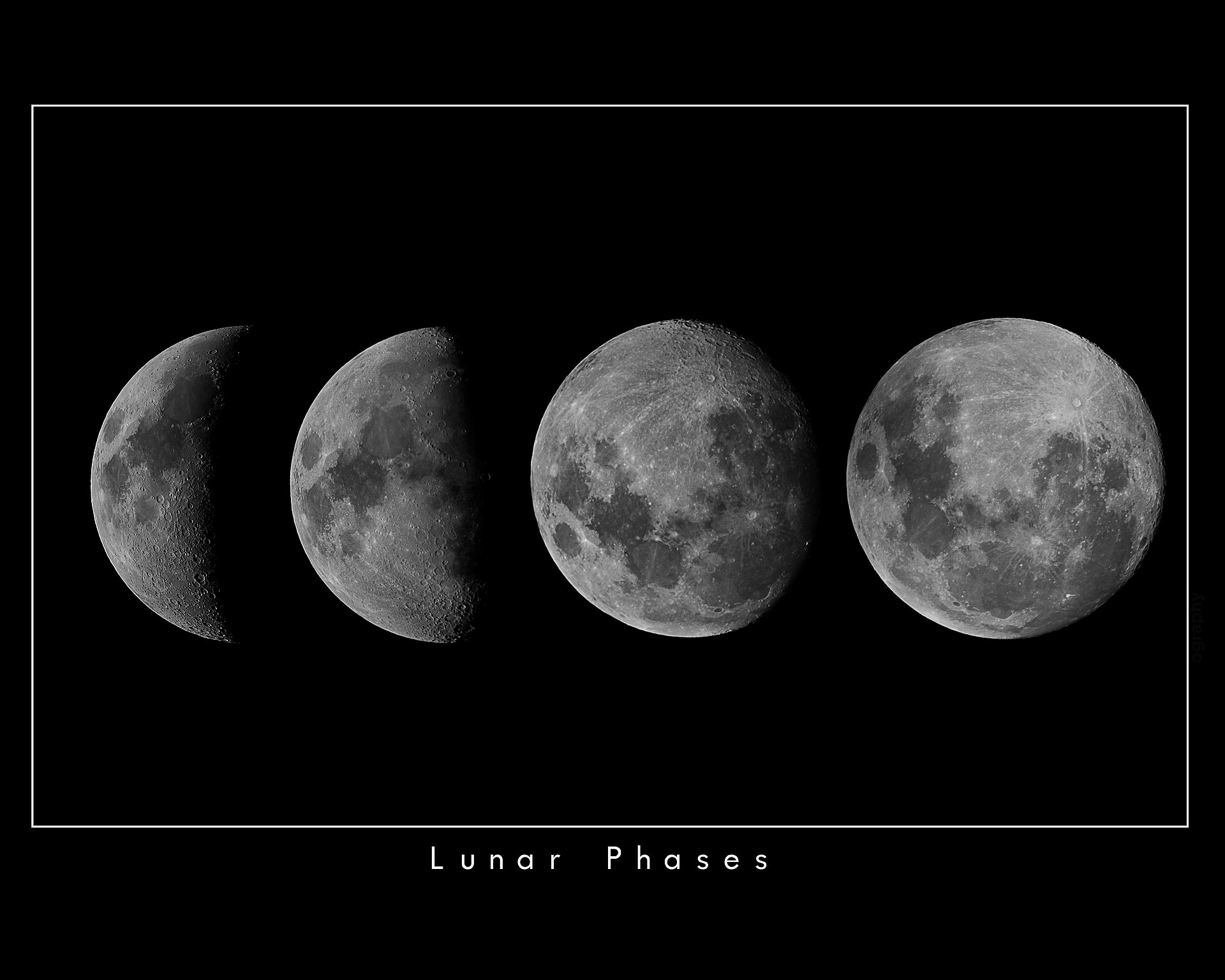
Photo: David Warrington from England / Wikimedia Commons (CC BY 2.0)
Moon

Watching the Moon Night to Night: What Changes

The moon changes phase, light, and rise time night to night. Here is what actually shifts in the sky and how to read each change.

Nagi5 min read

Watching the moon night to night: what actually changes

The moon looks like a different object almost every time you check on it, and the reasons turn out to be fairly ordinary. Four things shift on a predictable rhythm: how much of the disk is lit, when the moon rises and sets, how high it climbs, and how large it appears. You do not need a telescope to catch any of them. Most nights, your eyes are enough. Watching the moon night to night comes down to geometry, patience, and a willingness to look up at roughly the same time for a few weeks.

How the Moon Changes From Night to Night

The shape is the change you notice first. One evening you catch a thin curve low in the west; the next it has fattened, and a week later the whole disk is bright. Then it starts to shrink again. The full loop takes a little over four weeks, so the moon is never quite the same twice in a row. Because the pattern repeats, tonight's shape previews the shape you will see roughly four weeks from now.

What changes is the angle, not the moon. The light you see is sunlight bouncing off the lunar surface, and the moon simply sits at a different angle to the sun from one night to the next. Earth's shadow plays no part in the ordinary phases. That shadow enters the picture only during a lunar eclipse, a far rarer event with its own separate explanation.

Two other shifts are easy to track alongside the shape. The moon rises later each night, and it stands at a different height in the sky. Together, those three changes account for most of what people mean when they say the moon looks different. Sky and Telescope publishes regular explanations of lunar phases if you want a deeper technical account.

Advertisement[SIDEBAR_RIGHT_2]

The Illuminated Fraction

The lit portion grows and shrinks in a steady cycle, from the first thin sliver after the new moon to the full disk and back. Astronomers call the growing half waxing and the shrinking half waning, and the distinction is practical rather than fussy. A waxing moon belongs to the evening sky; a waning moon belongs to the early morning. If you want to catch a crescent without setting an alarm, the evening version in the days after the new moon is the friendlier one. During the waxing half, the bright edge grows from the right side of the disk as seen from the Northern Hemisphere. After full, the light retreats from the opposite edge.

Earthshine

On a thin crescent, the darker part of the disk is often faintly visible. This is earthshine: sunlight reflecting off Earth's clouds and oceans, landing on the lunar surface, and bouncing some of it back toward you. Astronomers sometimes call it the ashen light. It shows up best in the days around the new moon, when the crescent is narrow and glare does not wash out the unlit side. Binoculars do not improve it much, because the effect is delicate rather than small. They will sharpen the crescent, but the soft glow around it tends to read best with the naked eye.

Rise and Set Times

The moon rises roughly fifty minutes later each day on average. That stretch is not fixed, because the moon's orbit is tilted relative to the sun's path and moves fastest when it is closest to Earth, so some nights the gap runs closer to twenty minutes and others to more than an hour. The average is the useful number. Over a week the arrival time drifts several hours later, which is why a given phase shows up in a different part of the sky depending on when you look.

Advertisement[SIDEBAR_RIGHT_6]

Where to Look

At new moon the moon rises and sets with the sun and is lost in the glare. A few nights later it trails the sun by a little and appears low in the west after sunset. By first quarter it is overhead at sunset and sets around midnight. At full it rises near sunset and stays up most of the night. After that it rises later and later, until it is visible only in the pre-dawn sky. Once you know the sequence, the moon's position alone tells you roughly where you are in the cycle.

Height, Size, and the Terminator

The moon also changes altitude. Near the new moon it hugs the horizon; by first quarter it stands higher; at full it reaches its highest point around midnight for observers in the Northern Hemisphere. This is the same geometry that gives the moon its phase, seen from a different angle.

The Moon Illusion

When the moon sits low near the horizon it looks noticeably larger than when it is overhead. The moon itself has not changed. Photographs settle the question immediately: the disk measures the same in both positions. The effect is in how we perceive it, and the leading explanations involve how the brain judges distance against foreground objects like trees and buildings. Measuring the moon against a fingertip at arm's length is a quick way to confirm the size does not actually vary. The moon's distance does change along its elliptical orbit, but only by a modest percentage, which is not what drives the horizon impression. NASA's lunar pages cover the orbit and its geometry clearly.

Advertisement[SIDEBAR_RIGHT_7]

Reading the Terminator

The terminator is the line between the lit and unlit parts of the disk, and it is where binoculars earn their keep. Because sunlight strikes that boundary at a low angle, every crater rim and ridge there throws a long shadow and stands out in sharp relief. Craters near the middle of the disk look flat and washed out by comparison. Follow the terminator from night to night and the same features appear under different lighting, sometimes as bright rings, sometimes as deep pits.

The moon is, in practice, a different object every night, and the changes are regular enough that a few weeks of watching teach you the sequence. Keep to eyes alone for the phases and the rise times, reach for binoculars at the terminator, and the whole cycle becomes legible.

Today's Horoscope

September 24, 2026

All signs →

Get Your Horoscope in Your Inbox

A weekly note on your sign, the moon, and what the stars are up to. No spam, unsubscribe anytime.

We respect your privacy. Unsubscribe at any time.