
Why Your Sun Sign Can Vary by Birth Date
Zodiac

Why Your Sun Sign Can Vary by Birth Date

Why two astrology sites list different signs for your birth date, and how cusp-born people are read. A clear explainer.

Nagi5 min read
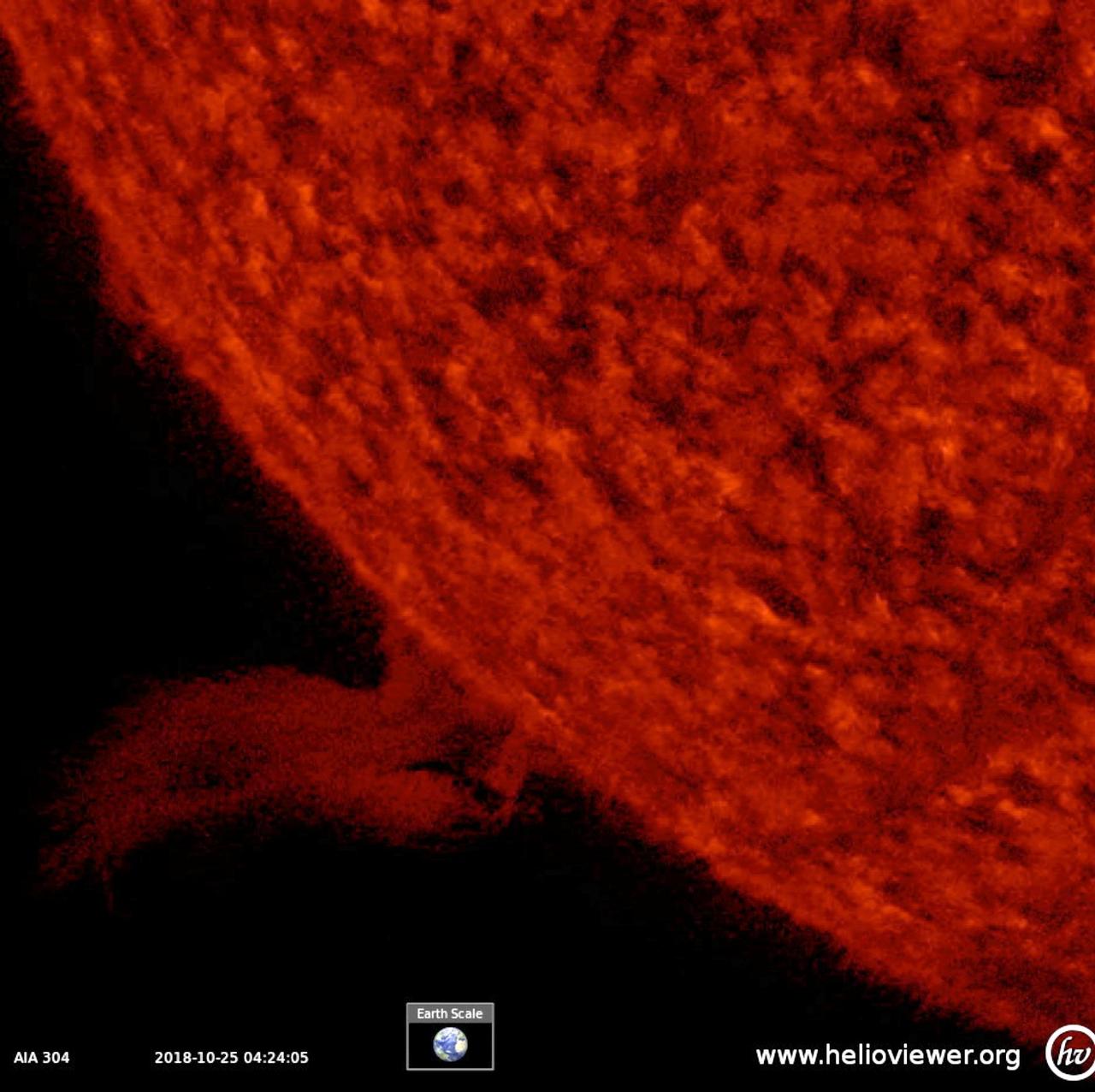
Photo: NASA/JPL / NASA (Public domain)

If you were born near the boundary between two zodiac signs, you have likely entered your birth date into two different astrology websites and received two different answers. One site says you are a Leo, the other insists you are a Virgo. This is not a glitch, nor is it carelessness on either site’s part. It comes down to how each site calculates the sun’s position, and whether it uses your exact birth time and location. The short answer is that your sign is determined by the precise moment the sun crossed from one constellation of the zodiac into the next, and that moment is an astronomical event, not a calendar date.

The Sun Moves on a Schedule, Not a Calendar

Astrologers read the zodiac as a band around the sky, divided into twelve equal segments of thirty degrees each. The sun travels through this band over the course of a year, and your sun sign is simply the segment the sun occupied at the moment you were born. That moment is precise to the minute. The sun does not change signs at midnight on a fixed day each year. It crosses a boundary at a specific hour and minute, and that time varies from year to year.

Advertisement[SIDEBAR_RIGHT_2]

For example, the sun might enter Virgo on August 22 at 11:15 p.m. in one year, and on August 23 at 4:30 a.m. in another. If you were born on August 23, your sign depends entirely on whether your birth time falls before or after that exact crossing. A table that simply lists “Virgo: August 23 to September 22” is a simplified shorthand. It works for most people, but it fails precisely for those born on the first or last day of a listed range. A calculated chart, by contrast, uses your full birth data - date, time, and place - to find the sun’s exact position. That is why two sites can disagree: one uses a fixed date table, and the other runs a calculation.

Time zones add another layer. A birth at 11:00 p.m. on August 22 in New York is already 4:00 a.m. on August 23 in London. The local calendar date changes, but the sun’s position in the sky does not. A site that only asks for your date, without your time and location, cannot possibly account for this. It is guessing. Astronomers at the International Astronomical Union track these boundary times precisely, and their data confirms that the sun’s entry into a sign is a measurable event, not a label on a calendar.

Advertisement[SIDEBAR_RIGHT_6]

A Cusp Is Not a Blend of Two Signs

You may have heard the word “cusp” used to describe someone born on the boundary between signs, and the popular idea is that such a person is a mix of both. A Leo-Virgo cusp, for instance, is often said to combine Leo’s warmth with Virgo’s practicality. In a technical sense, astrologers do not read it that way. The cusp is simply the exact point where the sun moves from one sign into the next. At any given moment, the sun is in one sign and one sign only. There is no overlap and no blend.

What a cusp does mean in practice is that the exact minutes around your birth time matter enormously. If you were born at 11:58 p.m. on the boundary day, you are one sign. If you were born at 12:02 a.m. on the next day, you are another. The difference is four minutes. That is why a birth time on a hospital record is so valuable. Astrologers read the chart from that single precise position, and knowing it resolves the ambiguity. Without a birth time, a careful astrologer may note that the sun was near a boundary and read the chart with extra caution, but the chart itself is never a mixture.

The word “cusp” in popular astrology is a handy label for the experience of feeling close to both signs, and many people born near a boundary do relate to traits from both. That is a reflection of the broader chart, not a special hybrid sun sign. The moon, the rising sign, and the positions of the planets all shape personality, and someone born two hours before a boundary may simply have a chart that leans strongly toward the next sign in other ways. The sun sign alone never tells the whole story. For further reading, we have covered how the rising sign can alter first impressions and why the moon sign often feels more private than the sun sign.

Advertisement[SIDEBAR_RIGHT_7]

How to Settle It With Your Exact Birth Time

If you want a reliable answer for your own sign, the fix is straightforward. You need your exact birth time, down to the minute if possible, and your birth location. Birth certificates and hospital records usually list the time. Family members may recall it, or you may find it in an old baby book. With those two pieces of information - time and place - any serious astrology calculator can determine your sun sign with certainty. Enter the data into a site that asks for both, and the disagreement will disappear. The United States Naval Observatory publishes astronomical data that can confirm the sun’s exact position for any given moment, and many reference libraries provide access to it.

Today's Horoscope

September 24, 2026

All signs →

Get Your Horoscope in Your Inbox

A weekly note on your sign, the moon, and what the stars are up to. No spam, unsubscribe anytime.

We respect your privacy. Unsubscribe at any time.