
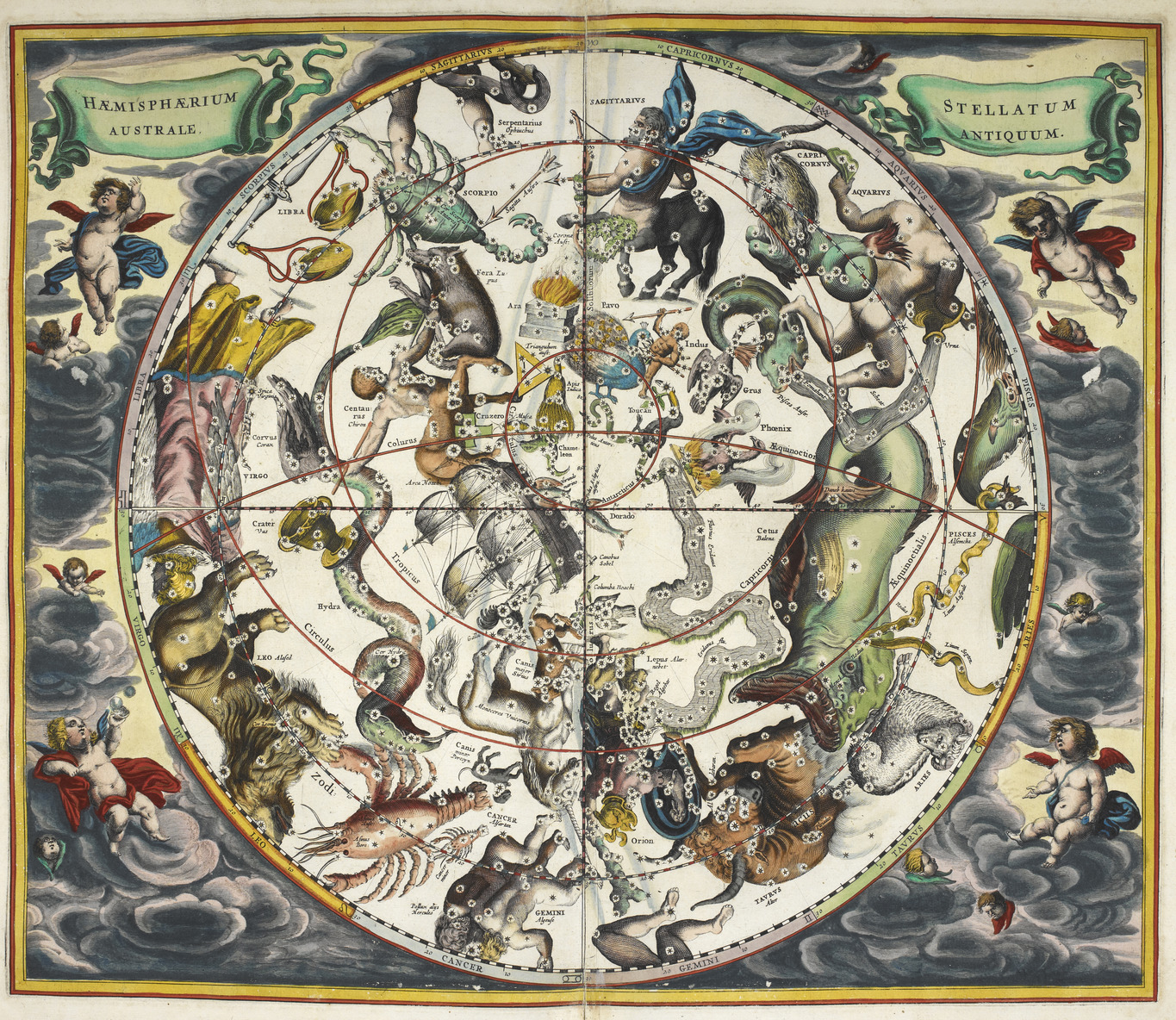
What Zodiac Polarity Actually Means
The twelve signs of the zodiac alternate around the wheel in two groups of six. One group is traditionally called positive, masculine, or yang; the other is called negative, feminine, or yin. Many modern astrologers prefer expressive and receptive, or active and responsive. The terms describe a rhythm of alternating emphasis, not a ranking.
Once you see the pattern, it stays simple. Aries is positive, Taurus negative, Gemini positive, Cancer negative, and so on around the circle. Fire and air signs fall into one group, earth and water into the other. Every sign has a counterpart directly across the wheel that holds the opposite polarity, which is part of why oppositions are read as complementary rather than purely conflicting. This is a naming convention inherited from older astrological language, not a claim about worth, capability, or gender. Reading positive and negative polarity in the zodiac without the value judgment means treating the distinction as a description of how a sign tends to meet the world rather than a grade attached to it.
The vocabulary itself is older than most of the meanings now layered onto it. Positive and negative once carried a technical sense closer to the poles of a battery, additive and subtractive, and masculine and feminine reflect the language of the tradition's era rather than an assertion about men and women. Yang and yin arrive from a different system entirely. None of these words measures strength, and a chart is not weaker for carrying more yin placements.