
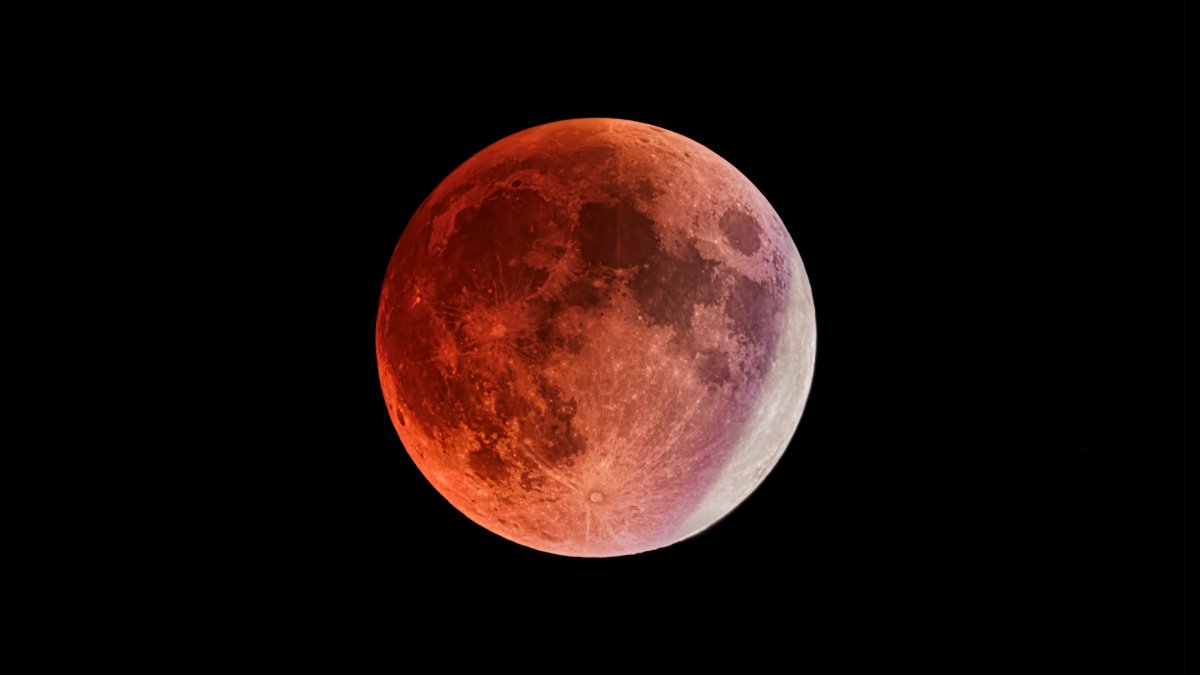
A partial lunar eclipse will take place next week, and if weather conditions are favorable, the Chicago area is positioned to see an especially dramatic version of the event. According to NASA, more than 95% of the moon’s surface will be obscured by the Earth’s shadow, giving the moon a reddish tint that characterizes such spectacles. The eclipse is scheduled to begin shortly before 8:30 p.m. on August 27, with maximum coverage occurring just after 11 p.m. that evening. For skywatchers in the region, the moon will be high enough in the sky to remain visible at the peak of the eclipse.
The event is a partial lunar eclipse, but it will come close to being a total one, as nearly 96% of the moon’s surface will fall under shadow, according to NASA. This is distinct from a solar eclipse, which happens when the new moon passes directly in front of the sun. In a lunar eclipse, the Earth moves between the full moon and the sun, with the planet’s shadow creating the effect. Unlike a solar eclipse, a lunar eclipse is completely safe to view with the naked eye.
The reddish glow that the moon takes on during such eclipses is caused by the way Earth’s atmosphere filters sunlight. Colors with shorter wavelengths, such as blues and violets, scatter more easily, while colors with longer wavelengths, including red and orange, are better able to pass through the atmosphere. Those longer wavelengths then strike the moon’s surface, giving it the distinctive color change. NASA explains this process as the reason the moon appears different during an eclipse.
The eclipse will be visible across North and South America, as well as parts of Africa and Europe, according to NASA. This makes the event broadly accessible to observers on multiple continents, not just those in the Chicago area. For those who miss this eclipse, the next opportunity to see a comparable event will not come quickly. The next three lunar eclipses are classified as “penumbral” eclipses, which only cause the moon’s surface to darken slightly and are often barely noticeable from Earth.
The next partial lunar eclipse after this one is scheduled for January 12, 2028, according to NASA. That means skywatchers will have to wait more than a year for another event of similar magnitude after next week’s showing. For now, the upcoming eclipse offers a chance to see nearly the entire moon’s surface take on an eerie glow, provided the skies clear. Observers in the Chicago area are advised to look to the sky after twilight, when the eclipse will already be underway and the moon will be well positioned for viewing.