
Astrology and Astronomy: Overlap and Divergence
Manishankar
## Astrology and astronomy: where they overlap and where they part
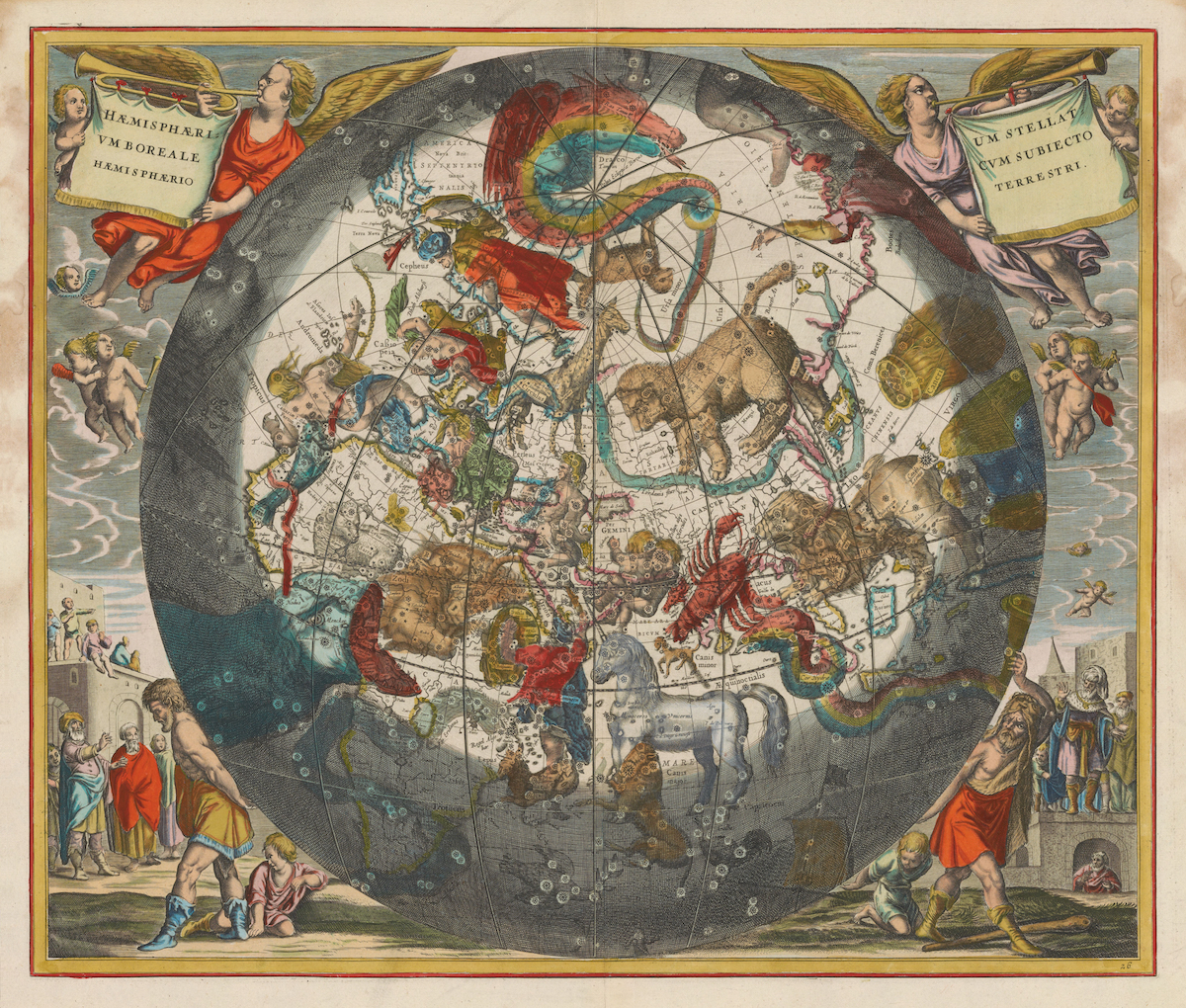
Astrology and astronomy share a sky, a set of coordinates, and a long stretch of history. They differ on one point, and that point turns out to be the whole story. Astronomy describes what is there. Astrology reads what those positions are said to mean for a person. Neither field is the other, and neither is the other's rival. The difference rewards a slow look, because it explains why the two can sit side by side without competing.
## The Same Sky, Two Different Questions
Both traditions start with observed positions: the Sun, the Moon, the planets, the stars. An ephemeris - the table of where celestial bodies sit at a given moment - is astronomical data. A birth chart depends on that data for its accuracy. When an astrologer says a planet sits at 14 degrees of Leo, the number comes from the same positional system an astronomer uses. The zodiac itself is a measurement convention, a way of dividing the sky into twelve 30-degree segments, and its boundaries are astronomical by definition.
The parting comes at interpretation. Astronomy makes no claim that a position means anything for a person. Astrology assigns significance: a placement is read as a tendency, a theme, a tone. That interpretive step is the departure point, and it is a step astronomy does not take and does not need. Here, astrology is reflection and entertainment, a symbolic language rather than a scientific prediction, and holding that frame keeps the comparison honest.
## The Shared Foundation
### One sky, one set of numbers
Both point at the same objects. Latitude, longitude, time zone, and the moment of birth all feed a calculation whose precision owes everything to astronomical method. Software that draws a chart runs the same kind of position-finding mathematics used in astronomy, just aimed at a symbolic output. In that narrow sense, astrology sits on top of astronomy rather than beside it.
### A common history
For most of recorded history there was no split to make. Babylonian scribes tracking Venus and Jupiter were doing work we would now file under both headings. Greek astronomy and Greek astrology grew from one root; Ptolemy wrote on the motions of the heavens and on their meanings within the same tradition. Islamic scholars preserved and refined both, and European astronomers through the Renaissance often cast charts. Kepler is the familiar example, a working astronomer who also practiced astrology while questioning much of it. The separation is recent, not ancient.
### Why the divide looks older than it is
The modern split hardened only as astronomy became a testable physical science and astrology did not follow it. That is a story about method, not about the sky changing hands. The shared foundation was never demolished; it was divided into two jobs. Astronomy took the measuring, astrology kept the meaning, and the chart kept borrowing the numbers.
## Where They Part
### Description versus meaning
Astronomy says a planet is at a certain place moving at a certain rate. It stops there, because there is nothing further it needs to say. Astrology picks up the same position and reads a tendency into it. That is the whole divergence in one sentence, and it is why the two can share a dataset and still answer entirely different questions.
### Cause versus correspondence
Astrology is not a physical-cause model. It does not argue that a distant planet pushes on a life. Most astrologers describe it as a system of correspondence, a symbolic map rather than a mechanism. This is why the gravitational objection misses: a well-read chart is not making a physics claim to defend. It is reading pattern and meaning, the way one reads a poem's structure without claiming the structure exerts force.
### Evidence and its limits
Here the two genuinely diverge. Astronomy builds testable models and revises them against measurement, and its findings are [published, reviewed, and corrected](https://science.nasa.gov/universe/). Astrology has no comparable predictive record under controlled study, and it does not claim to be a science. It is better understood as a reflective practice, a way of thinking about temperament, timing, and choice.
That distinction matters for how the practice gets used. A chart is a prompt for self-reflection and enjoyment, not a verdict. Where a real decision involves health, money, or law, a qualified professional is the right source, and astrology is not a substitute. The symbolic reading can still be useful as one lens among several, as long as it is not the only one in the room.
## Reading Both Without Confusion
The clean way to hold the two is this: astronomy supplies the coordinates, astrology supplies the interpretation. You can admire the first as science and enjoy the second as symbolism without pretending they are the same, and without asking astrology to do work it never claimed. The same sky supports both. The overlap is the data and the history; the parting is the meaning we choose to read into it. If you want to go further, our guides to reading a chart and to the zodiac's structure pick up where the coordinates leave off, and they stay inside the same frame: reflection and entertainment, offered as a language rather than a forecast.
Advertisement[IN_ARTICLE_6]
More From The Newsroom
Life's Finally Getting A Lot Less Intense For 3 Zodiac Signs For The First Time In 8 Years

Your Love Horoscope Is Here For Wednesday, September 23: Be Honest Today
5 Zodiac Signs Have The Best Horoscopes On Wednesday, September 23

5 Zodiac Signs Have A Lot More Financial Opportunities While Venus Is In Scorpio Until October 25
Horosly writes its own account of the story above and credits the outlet that reported it. Follow the source link for the publisher's original article. Disclaimer