
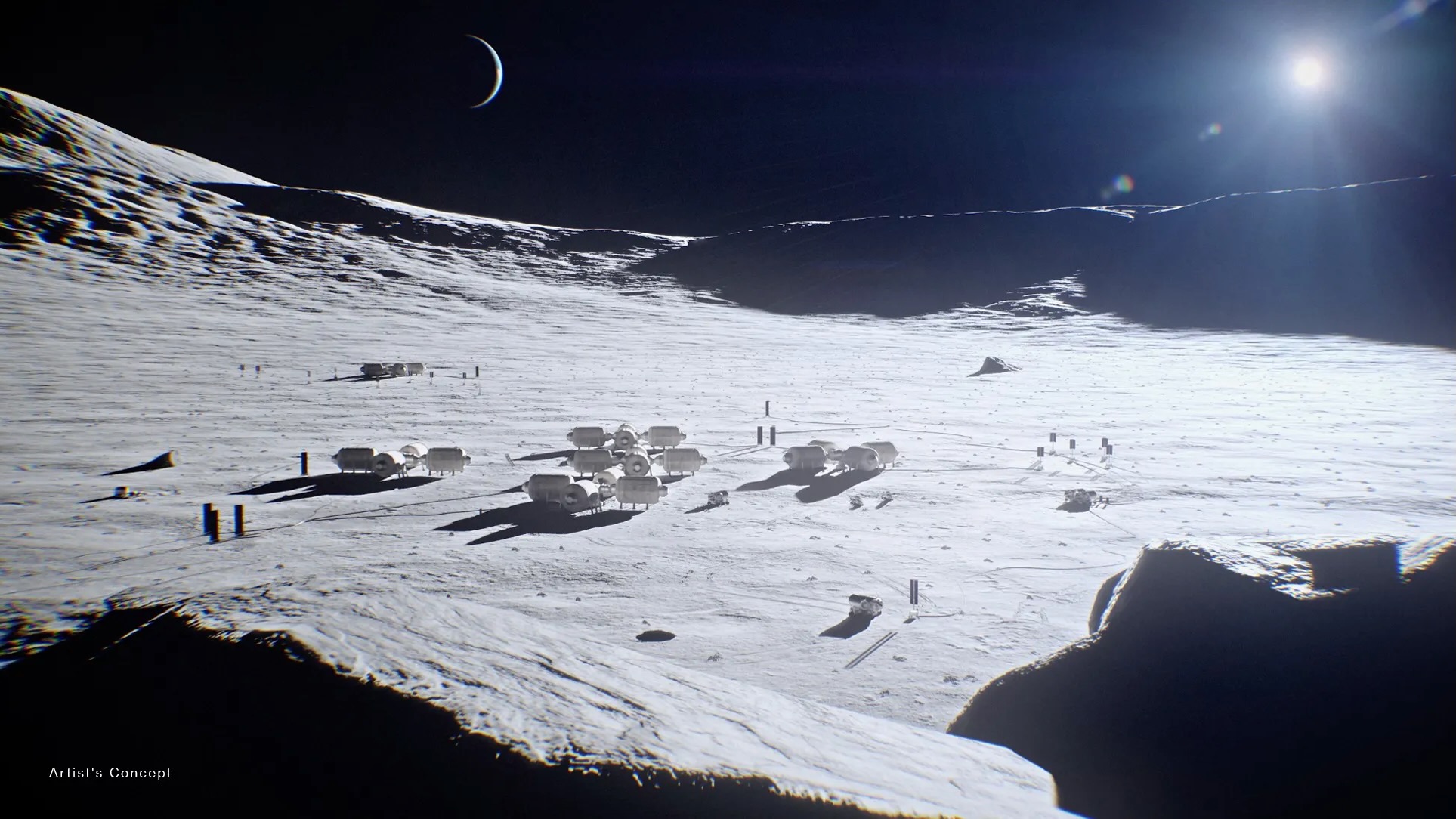
Two researchers are calling for a temporary halt to industrial activity on the moon, arguing that rules governing lunar development need time to catch up with the plans of spacefaring nations. China and the United States are both pursuing permanent human settlements on the moon by the end of the next decade, and commercial ventures hope to support those explorers by mining water, construction materials, industrial metals and rare earth minerals.
Florian Rabitz, a professor of climate and technology governance at Vilnius University in Lithuania, and Xiao-Shan Yap, an assistant professor of Earth-space sustainability at Utrecht University in the Netherlands, made the case in the journal Global Environmental Politics last month. They argue for strong international rules and wide, inclusive discussion so that the global community can weigh the effects of economic activity on the moon. A pause on lunar industrialization, they say, would give regulators room to decide what should be permitted before a moon rush damages the lunar environment.
The pair warn that scientific research could suffer. They describe the lunar landscape as scientifically priceless and argue that unchecked development could destroy it. They also object to a small number of powerful players colonizing the moon, specifically China, the U.S. and their close allies.
Rabitz said in a statement that any actor carrying out major infrastructure work on the moon will assert its position, including by defining its own exclusive territories. He said that should not be the Wild West. The phrase gave the researchers' warning its headline.
Rabitz also noted that the United Nations' 1967 Outer Space Treaty bars individual nations from appropriating the moon. Even so, he argued, the moon and its valuable resources are unlikely to remain truly neutral territory if a small number of powerful nations lead their exploitation.
The researchers' piece calls for deliberation that is broad and inclusive, alongside robust international regulations, before lunar industry proceeds. Their concerns cover both the environmental cost to the moon and the question of who controls it.