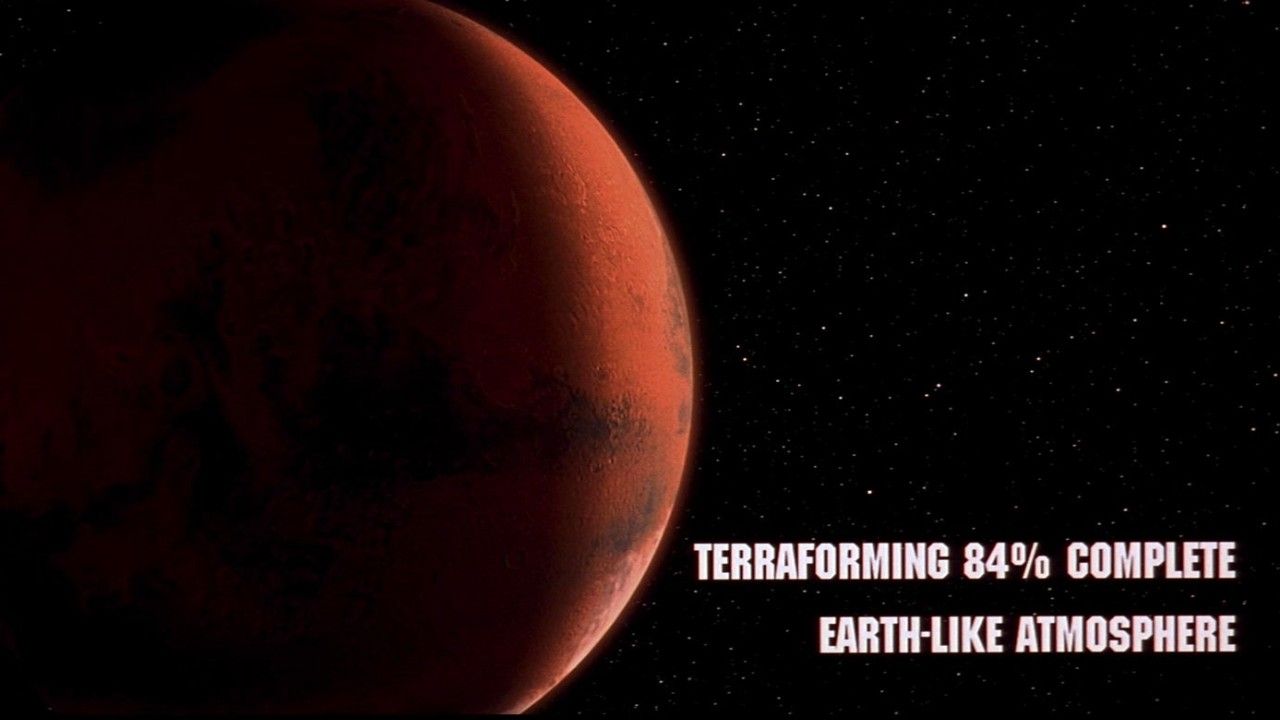
Twenty-five years after the release of the film Ghosts of Mars, experts say humanity is still far from establishing a permanent home on the Red Planet. The movie depicted a remote mining outpost called Shining Canyon, a harsh and dusty environment, but the scientific reality of living on Mars involves far more than dealing with unpleasant weather. According to Dr. Bruce Betts, chief scientist at the Planetary Society, the obstacles are fundamental. He pointed to a lack of carbon dioxide as a showstopper for global terraforming, along with the enormous costs and the need for multi-generational political and economic support. He also noted that international planetary protection agreements add another layer of complication.
Dr. Mark Gallaway, an astronomer and founder of Starlight Planetarium, echoed those concerns about cost and carbon dioxide while raising additional issues. He mentioned that enclosed habitats built on Earth have repeatedly required external intervention because of conflicts among the residents, which suggests long-term social problems for any Mars colony. He also highlighted a critical unknown: the effects of Martian gravity, which is about 38 percent of Earth's, on human physiology. Gallaway said that without spin habitats to test this in advance, people might return from a year on Mars unable to function normally.
Recent research has cast further doubt on terraforming possibilities. Betts pointed to a 2018 study by Bruce Jakosky and Christopher Edwards, which explicitly concluded that terraforming Mars is not possible with present-day technology. Betts expressed pessimism about exotic solutions like nanorods or aerogel, noting that even the more plausible aerogel approach would only create localized domes rather than a planet-wide change. He said that while people continue to develop new technologies, he does not see how they could be implemented successfully.
Gallaway also cited new discoveries about Martian soil being toxic to life, which undermines scenarios like the one in The Martian, where a character grows potatoes. He explained that any colonization effort would require bringing all topsoil from Earth, a major logistical hurdle. The ethical dimension also complicates the matter, as discussed by Dr. Jeffrey Bennett in the book Life in the Universe, co-authored with Seth Shostak, Nicholas Schneider, and Meredith MacGregor. The book raises questions about whether humans have the right to fundamentally alter another planet's atmosphere, potentially harming other lifeforms that might already exist there.
Bennett himself questioned whether humanity is ready for such an undertaking, given the ongoing difficulty of managing Earth's climate. He said that since global warming is already making conditions worse for humans and other life, it is hard to believe we could successfully transform Mars into a livable world. He suggested that such a feat might become possible in the future, but only after we learn to take care of our own planet first.
Looking ahead to the movie's far-future setting, Betts said he does not expect significant progress toward terraforming by the year 2176. He predicted that research would continue on small-scale efforts, but that humanity would remain no closer to a full planetary transformation. Gallaway offered an alternative vision, advocating for space habitats built from asteroids rather than planet-based colonies. He suggested mining platinum group metals from an M-type asteroid, then spinning it up to create a living environment at 1G, an approach he said is easier than changing a planet's environment.