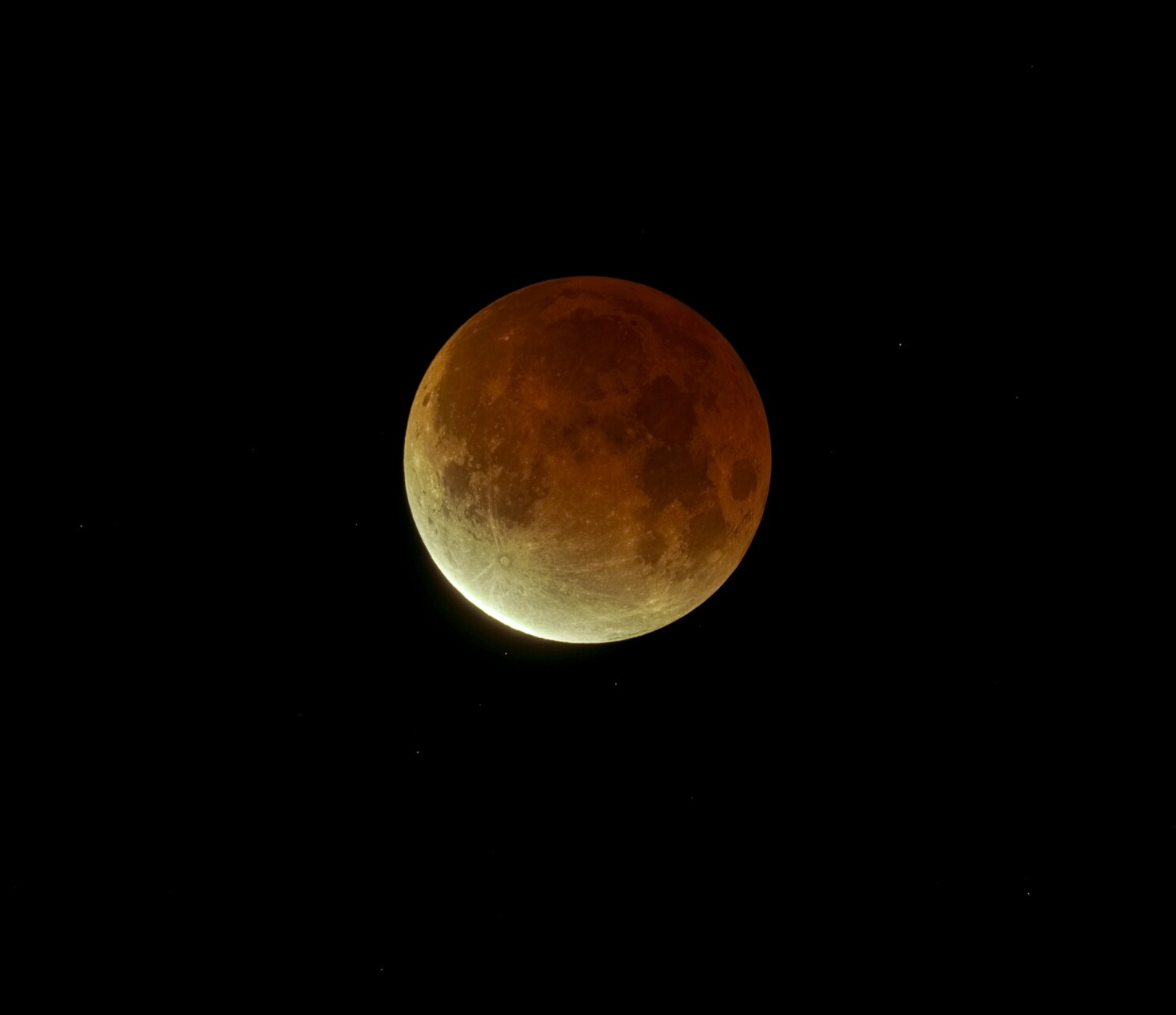
Chicago-area skywatchers will have a chance Thursday night to see a partial lunar eclipse, with more than 96 percent of the moon expected to be obscured by Earth’s shadow. The event could give the moon a deep red hue, which is why such eclipses are sometimes called blood moons. Hunter Miller, public observing educator at the Adler Planetarium, said every lunar eclipse is special and that one with this much coverage is particularly exciting. The next full eclipse of the moon will not occur until 2029, according to the source.
The partial eclipse is scheduled to begin around 9:30 p.m., with maximum coverage occurring near 11:15 p.m., said Miller. This timeline is earlier than many eclipses, which often happen in the early morning hours. Michelle Nichols, director of public observing at the Adler Planetarium, noted that this schedule gives Chicagoans a prime viewing opportunity without having to wake up in the middle of the night. A lunar eclipse happens when Earth’s shadow falls on the moon, and this one is considered near-total because of the high percentage of coverage.
The moon will not be very high in the sky, so viewers should find a location with a clear sightline to the south and southeast. Unlike some astronomical events, this eclipse does not require a dark sky, making it accessible to city residents dealing with light pollution. Observers across North and South America, Europe, Africa, and the Middle East may see the eclipsed moon if weather conditions cooperate, as reported by the Associated Press.
Viewing the lunar eclipse safely requires no special equipment, unlike a solar eclipse, which can damage eyes if viewed directly without protective glasses. The naked eye is sufficient, though telescopes or binoculars could offer a more detailed look at the moon’s surface. The red color during the eclipse is not merely a shadow effect, according to Miller. He explained that the color comes from the reflected light of all sunrises and sunsets occurring on Earth at that moment, with that light bending around the planet and striking the moon.
Earlier this year, a total lunar eclipse stretched over the Americas, Australia, and eastern Asia, and a total solar eclipse occurred with a path centered over Europe, leaving most of the Americas without a view. A lunar eclipse should not be confused with a solar eclipse, which happens when the moon passes directly between the sun and Earth. Thursday’s event is a partial eclipse, meaning the entire moon will not fall within Earth’s shadow, but at 96 percent coverage, it is close to total.