Two decades have passed since the International Astronomical Union voted to reclassify Pluto, stripping it of its status as the solar system's ninth planet. The decision followed years of debate that began in the 1990s with the discovery of Kuiper belt objects beyond Neptune that shared Pluto's orbital characteristics. In 2000, Neil deGrasse Tyson removed Pluto from the planets display at the Hayden Planetarium in New York. The issue came to a head in July 2005 with the discovery of Eris, a Pluto-size body even more distant from the sun. By 2006, after numerous proposals and counter-proposals, the IAU settled on a definition that made Pluto a dwarf planet.
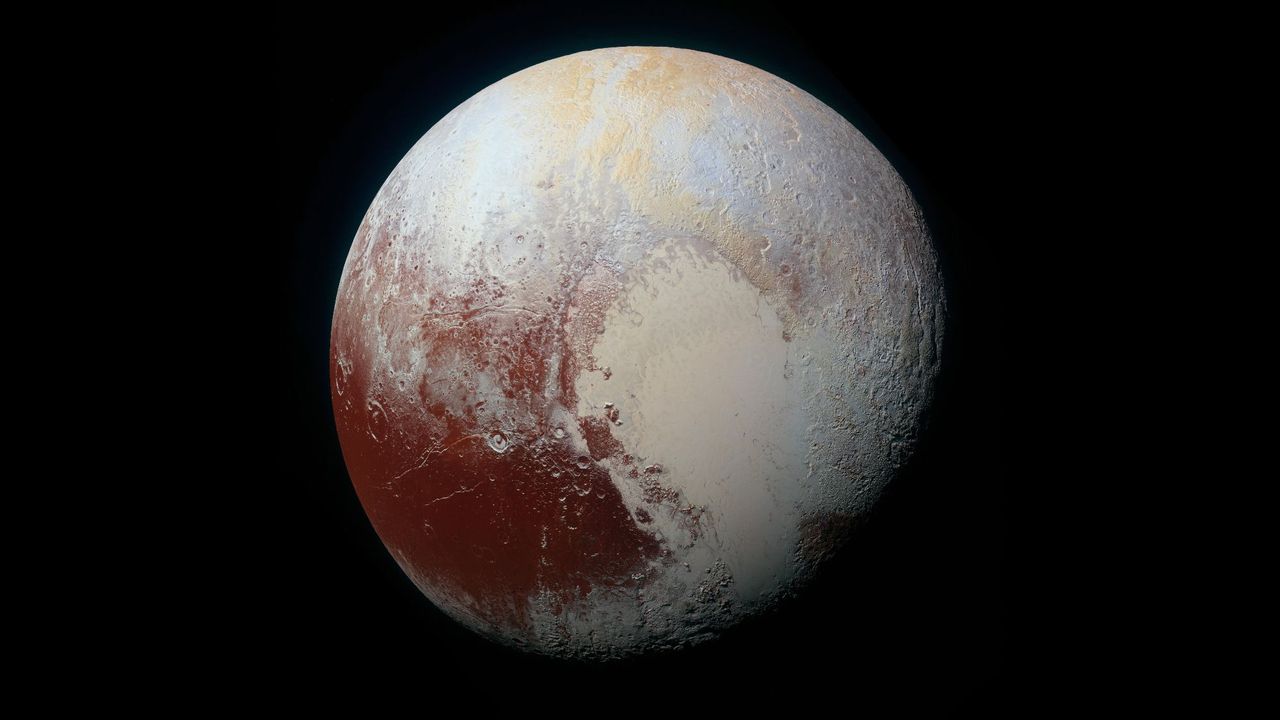
The public largely viewed the reclassification as a demotion, a perspective supported by scientists like Alan Stern, the principal investigator of the New Horizons mission. Stern's spacecraft launched in 2005 toward a planet, but by the time it arrived in 2015, Pluto had been redefined. The IAU assigned Pluto the minor planet number 134340, a designation typically reserved for asteroids. Some in the United States argued that Pluto should remain a planet because it was discovered by American astronomer Clyde Tombaugh at Arizona's Lowell Observatory in 1930. When New Horizons reached the world, it revealed a complex body with active nitrogen glaciers and a giant heart-shaped feature, not a simple minor object.
Paul Byrne, a planetary astronomer at the University of Washington in St. Louis, argues that the decision should be revisited. Byrne told Space.com that Pluto is a planet, along with the other dwarf planets Ceres, Eris, Makemake and Haumea, as well as objects like Sedna and Quaoar. He believes there is no benefit to excluding Pluto and the others from planetary status. Byrne acknowledges the debate is partly about semantics, noting that nature does not care what humans call Pluto. However, he argues the IAU's 2006 decree has harmed science communication, as public audiences focus on the demotion rather than Pluto's geological activity.
The IAU's planetary definition has three parts, the first requiring an object to be in hydrostatic equilibrium, meaning its gravity has pulled it into a spherical shape with internal differentiation. The second requires an object to orbit the sun, which technically excludes exoplanets and rogue planets that have been ejected from their star systems or formed directly from collapsing gas clouds. The third and most controversial requirement is that a planet must have cleared its neighborhood of other bodies. Pluto fails this test because its orbit crosses Neptune's and it shares space with other Kuiper belt objects, but critics note that near-Earth asteroids could similarly disqualify Earth.
Byrne proposes replacing the current definition with a geophysical approach, focusing on whether an object is round and has undergone internal chemical processing. He suggests that bodies large enough to pull themselves into spheres are capable of active geology, including outgassing, volcanism and even short-lived magnetic fields. Under this view, he would also count large moons as planets. Byrne objects to the term "dwarf," arguing that it implies a natural hierarchy among planets that does not exist, since all planets formed through the same coalescing process.
A counterargument is that if Pluto becomes one of many planets, it would lose its distinction, whereas as a dwarf planet it serves as the standard bearer for its category. The debate may be tested as astronomers discover more distant objects, some of which could be as large as Mars or Earth. Such a world, formed in the outer solar system from leftover debris, would fail the IAU's cleared-neighborhood test despite its size. Byrne said that finding such a planet would be another nail in the coffin of distinguishing objects based on location rather than intrinsic nature.