
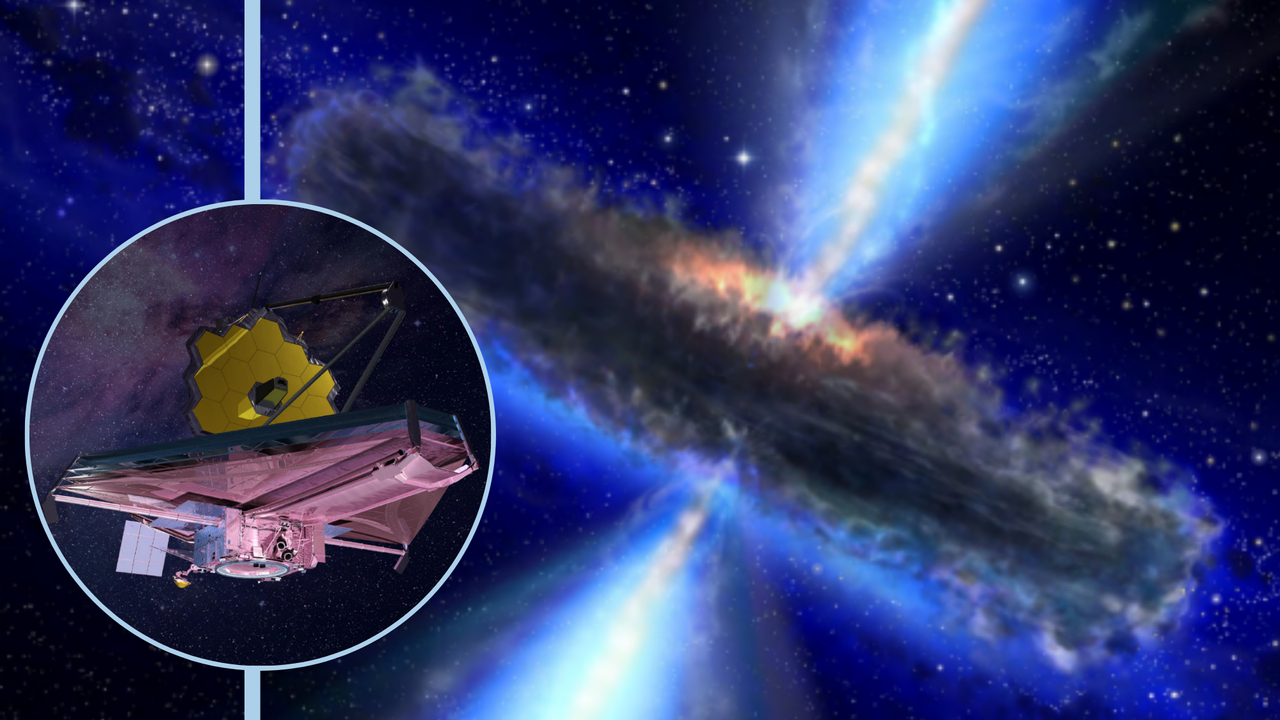
The James Webb Space Telescope has completed one of the most detailed studies yet of how planet-forming material escapes from the swirling disks of gas and dust around young stars. By observing 72 stars at different stages of early development, researchers have found that planet formation is a race against time. The building blocks for planets are constantly being lost from these protoplanetary disks, and the window for forming certain types of planets may close sooner than others.
The team, led by Naman Bajaj from the University of Arizona, used data from the telescope's Mid-Infrared Instrument to track the movement of molecular hydrogen, one of the most common molecules in protoplanetary disks. Each star in the survey represented a different stage in the early life of a star system, allowing the researchers to piece together a kind of movie showing how a planetary system evolves. The findings help explain how and why our own solar system took the shape it did around the infant sun about 4.6 billion years ago.
A key result is that the mechanisms driving material loss from these disks change and shift in dominance as an infant star ages. Early on, powerful, magnetically driven jets and winds are the main force removing gas. These are powered by magnetic fields that weave through the disk. Later, as the disk thins and starlight passes through it more easily, those jets weaken, and high-energy radiation from the star begins ionizing gas and blowing it into space, a process called photoevaporation.
This matters because gas giants like Jupiter and Saturn have vast atmospheres and require far more raw material to form than smaller rocky worlds like Earth. The team found that gas giants must assemble their massive atmospheres while the disk is still substantial enough to supply them, before winds and jets carry that material away. Understanding when and how matter is lost allows scientists to determine at what stages of disk evolution gas giants can form.
Uma Gorti from the SETI Institute said the study is exciting because it shows, across a large sample of young systems, how gas-removal mechanisms change over time. She noted that disk dispersal sets a fundamental clock for planet formation, and once the gas is gone, the opportunity to build gas-rich planets is essentially over. The research also demonstrates that no single process is responsible for stripping planet-forming material from around infant stars.
The team's next step is to measure how much material each of these different mechanisms shifts and to examine which regions of the disks the mechanisms operate in. This should help develop a model showing how rapidly planet formation is shut off and where different types of planets are most likely to form. The research was published on August 25 in The Astronomical Journal.