
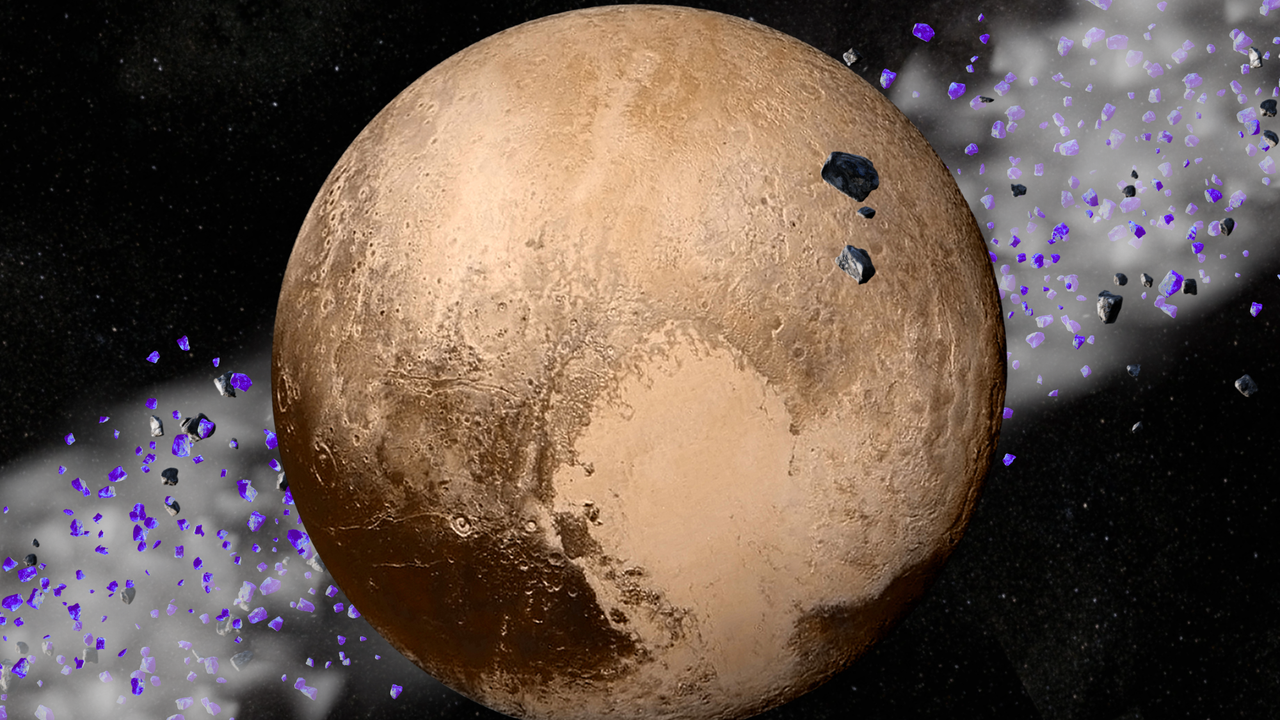
Twenty years ago, on August 24, 2006, the International Astronomical Union reclassified Pluto from the ninth planet to a dwarf planet. The decision came after the discovery of similar icy worlds in the Kuiper Belt, the ring of bodies extending beyond Neptune’s orbit. The union, acting on a definition developed by Uruguayan astronomers Julio Ángel Fernández and Gonzalo Tancredi, required a planet to orbit the sun, be round due to its own gravity, and have cleared its orbital neighborhood of debris. Pluto met the first two conditions but failed the third, as other objects cross its path, so it was placed in the new dwarf planet category.
The reclassification has sparked public sympathy for Pluto, with petitions circulating online to restore its planetary status. One petition started in 2024 has gathered over a thousand signatures. Another, somewhat lighthearted petition, argues that Pluto should not lose its planet rights simply because it is small, comparing the situation to a person named Daniel remaining human despite his size. The source article notes that this petition misunderstands the actual reasoning behind the change, but also suggests that the redefinition highlighted the true diversity of the solar system.
If sympathy is warranted, the article suggests Ceres may deserve it more. Discovered in 1801, 129 years before Pluto, Ceres is the closest dwarf planet to Earth and was the first such body found, though it was not labeled a dwarf planet at the time. Pluto has overshadowed Ceres in public attention as the most prominent dwarf planet.
The article also mentions Eris, another dwarf planet beyond Neptune. Eris is 1,445 miles wide, slightly smaller than Pluto’s 1,477 miles, but it is more massive, making it the most massive dwarf planet in the solar system. Unlike Pluto, Eris never had the chance to be considered a planet, and no petitions appear to demand its reclassification.
The source argues that Pluto’s change in status did not diminish its scientific or aesthetic value. Its heart-shaped plain of nitrogen ice, known as Sputnik Planitia, remains striking. The dwarf planet’s ice mountains, rising 11,000 feet, and its blue haze and shifting ice regions continue to fascinate researchers, showing it is more active than previously thought.
NASA’s New Horizons mission, which reached Pluto after a nine-year journey, remains a significant achievement regardless of Pluto’s classification. The observations from that mission are no less monumental for humanity because the target was a dwarf planet. Pluto still leads the dwarf planet category in public imagination and helped define an entire population of solar system bodies.