
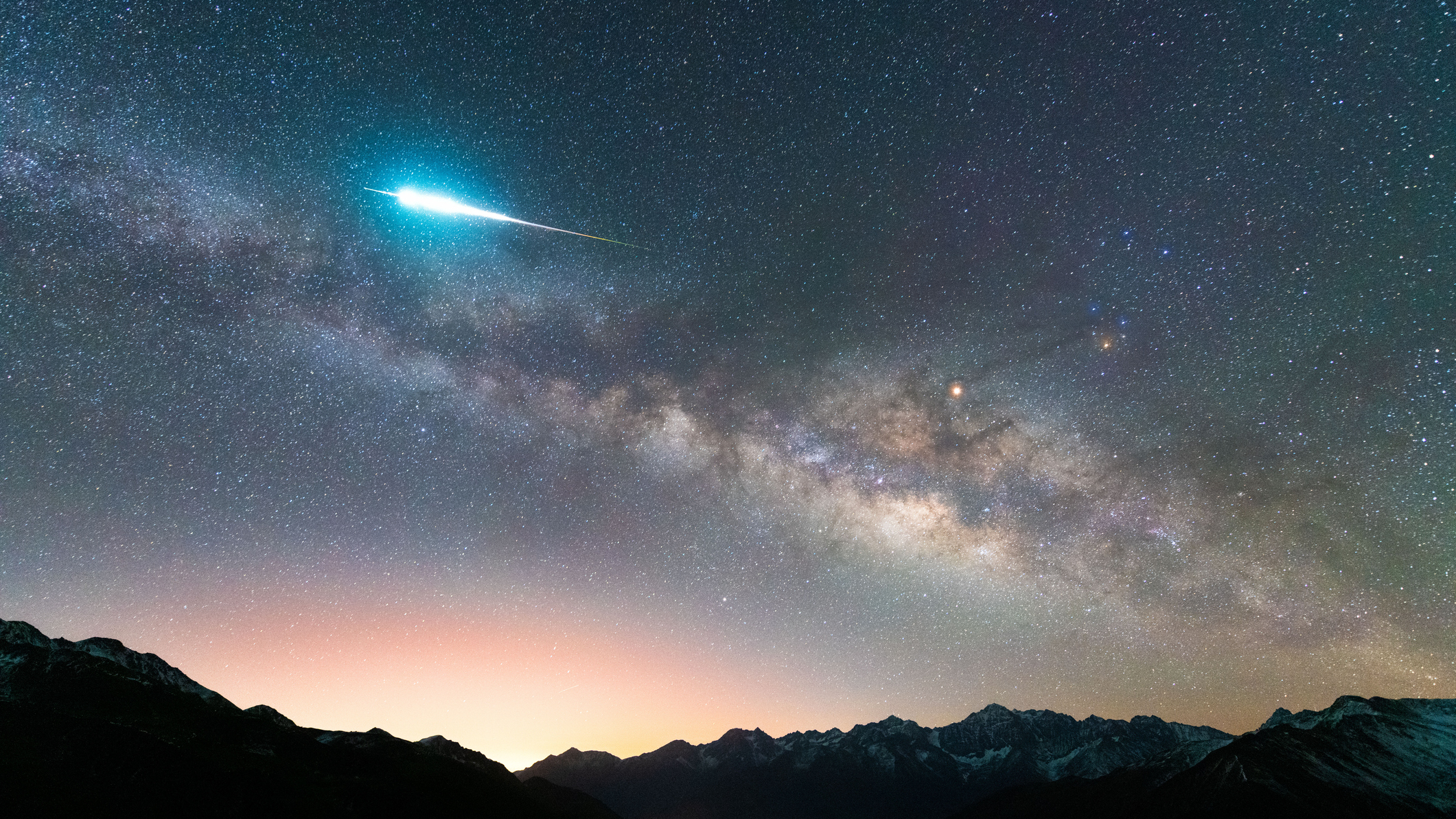
The Taurid meteor shower reaches one of its annual peaks overnight on Nov. 4-5, an event tied to a rise in fireball activity, with up to five meteors per hour potentially visible. The shower occurs each autumn as Earth passes through streams of debris left by Comet Encke, a 3-mile-wide (4.8-kilometer) icy body that completes an orbit of the sun every 3.3 years.
The debris streams create two branches of the shower. The Southern Taurids run from Sept. 20 to Nov. 20, while the Northern Taurids are active from Oct. 20 to Dec. 10. Particles from these streams hit the atmosphere at 65,000 miles per hour (104,607 kilometers per hour), producing streaks of light across the night sky.
Both branches appear to radiate from the constellation Taurus, which rises in the southeastern sky during November evenings. The Taurids are known for producing bright fireball meteors, which can shine more brightly than Venus when pebble-sized debris enters the atmosphere and burns up. The Southern Taurid shower has two yearly peaks; the first fell on Oct. 14, and the second is the Nov. 4-5 peak associated with the increase in fireballs.
The Northern Taurid stream is expected to peak overnight on Nov. 11-12, with the same predicted rate of up to five meteors per hour against a dark, near moonless sky. Around midnight on the peak nights, the radiant in Taurus sits high in the southeastern sky, which maximizes the number of meteors that can be seen.
Observers are advised not to stare directly at the radiant. Meteors near Taurus strike the planet almost head-on and therefore have the shortest trails, so a patch of sky some distance away offers the most eye-catching shooting stars as they skim through the atmosphere. Telescopes and binoculars should not be used for meteor hunting, since taking in as much of the sky as possible matters more than limiting the field of view.
Viewing calls for warm clothing and 20-30 minutes to let the eyes adapt to the dark, a step the source describes as vital and often overlooked for anyone hoping to catch even faint meteors. The source also points readers to its picks of the best cameras and lenses for astrophotography and its guide to capturing fast-moving meteors.