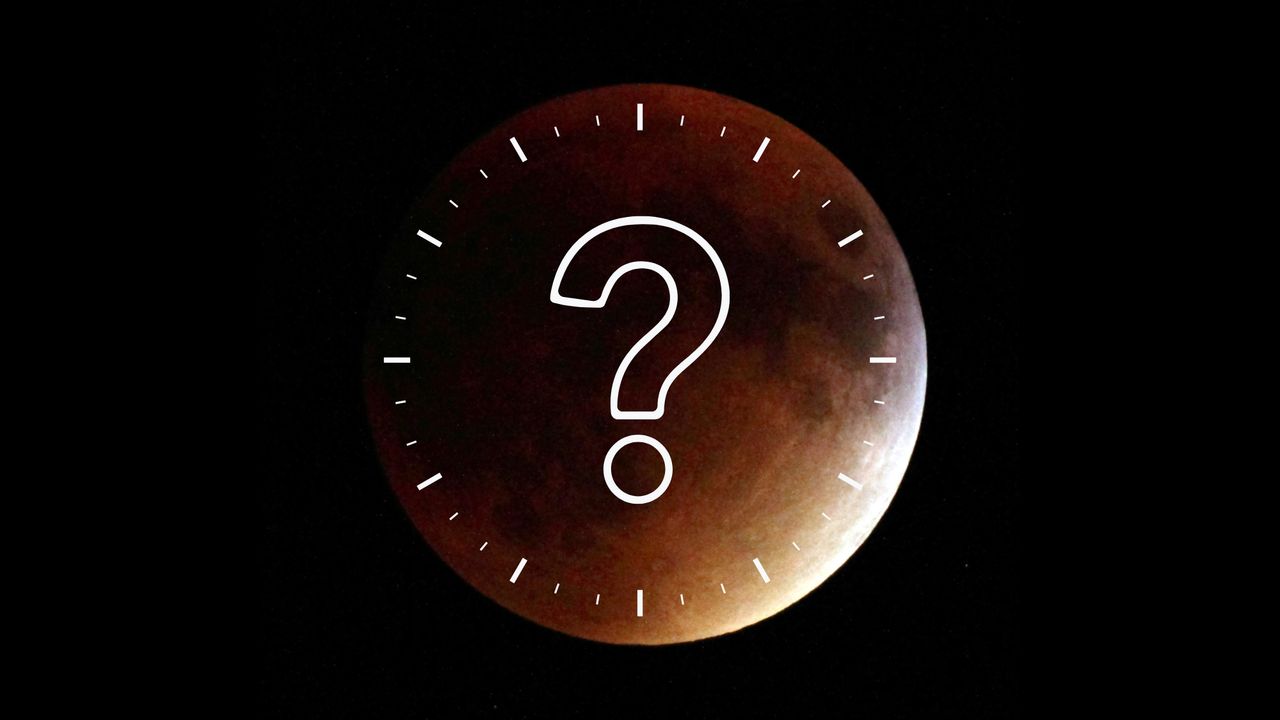
A partial lunar eclipse will occur on the night of Aug. 27-28, with the moment of greatest eclipse taking place at 12:12 a.m. EDT (0412 GMT) on Aug. 28. At that peak, 96.2% of the lunar surface will be covered by Earth's dark umbral shadow. Only a slender portion of the moon will remain directly illuminated by the sun, while the rest of the lunar surface may take on an eerie reddish-orange hue. This appearance is often described as an "almost blood moon."
The eclipse will be visible from North and South America, Europe, and Africa, though the amount of the event visible will depend on the observer's location and weather conditions. North and South America are particularly well-placed to view the entire eclipse. For European skywatchers, the event occurs during the early morning of Aug. 28, with the moon setting while the partial eclipse is still underway. From London, the maximum eclipse occurs at 5:12 a.m. BST, just over an hour before moonset.
No special equipment is required to view a lunar eclipse, unlike a solar eclipse. Observers can simply head outside and look up at the sky. Those who own binoculars or a telescope can use them for an even better view of Earth's shadow as it sweeps across the lunar surface. The event does not pose any risk to the eyes, so direct viewing is safe.
For those interested in photographing the eclipse, a guide on how to photograph a lunar eclipse is available, along with a roundup of the best cameras and lenses for astrophotography. The publication also invites readers to share their photos of the August lunar eclipse by sending images, comments, name, and location to a dedicated email address. The editor’s note specifies that such submissions may be shared with the site's readers.
The article was written by Daisy Dobrijevic, who joined the publication in February 2022 after working as a staff writer for All About Space magazine. She completed an editorial internship with BBC Sky at Night Magazine and worked at the National Space Centre, communicating space science to the public. Dobrijevic holds a PhD in plant physiology and a Master's in Environmental Science. Based in Nottingham, U.K., she covers all things space, with a special focus on solar activity and space weather, and has a keen interest in astrotourism and northern lights adventures.
Dobrijevic is scheduled to be a guest speaker aboard HX's Solar Eclipse Expedition in August 2026. She will also join Hurtigruten as an onboard astronomer for a northern lights sailing in January 2027. Her background includes extensive experience in space science communication, and she has been with the publication since early 2022. The article provides practical viewing details for the upcoming celestial event, emphasizing its accessibility to the general public.