
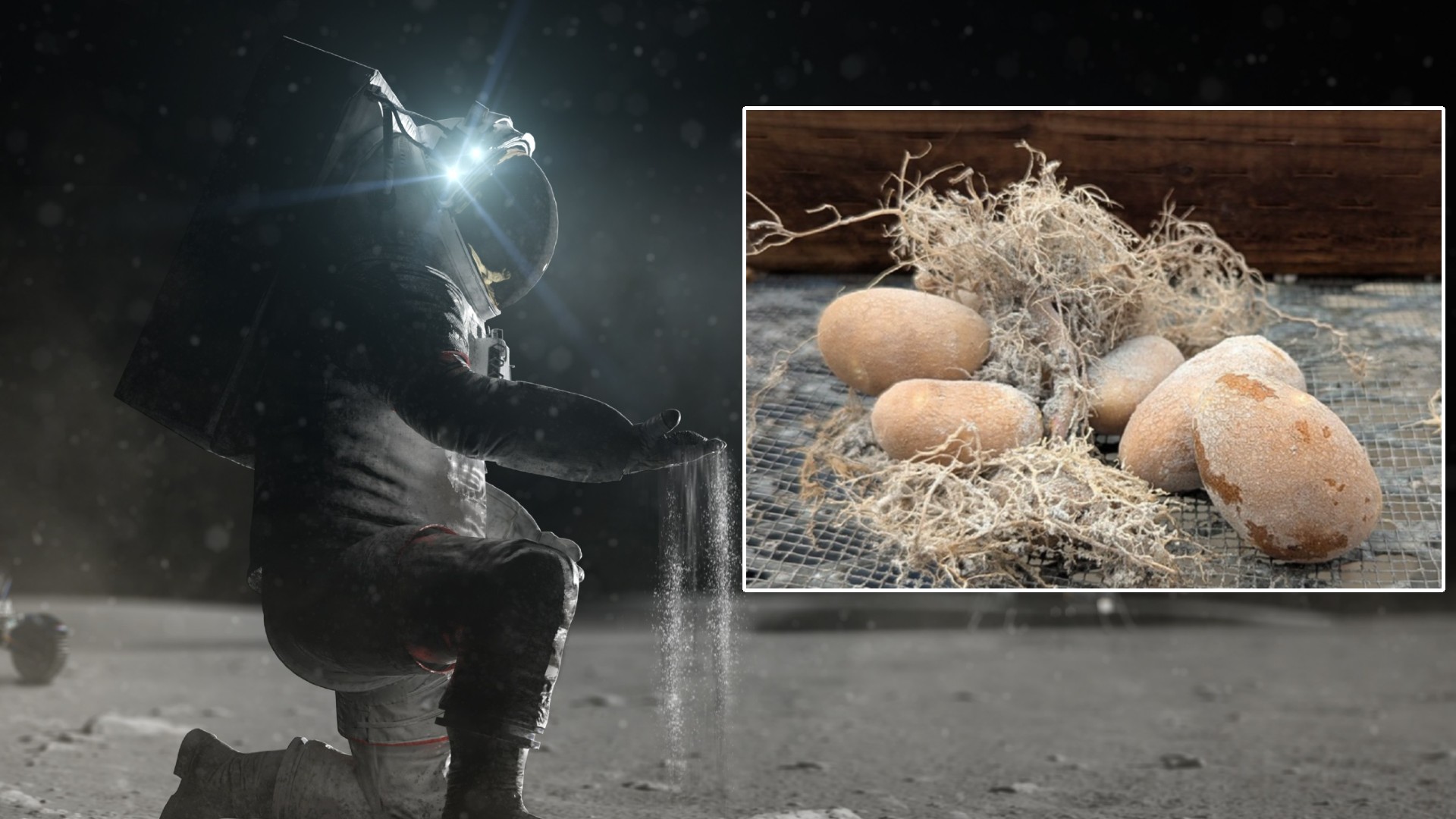
A research team at Oregon State University's College of Agricultural Sciences has grown potatoes in simulated moon dust, reporting results the scientists describe as promising. The findings were published Nov. 20 in the journal Microgravity Science. The work points toward the possibility of producing food on the lunar surface rather than shipping it from Earth.
Aymeric Goyer, an associate professor in OSU's Department of Botany and Plant Pathology, said in a statement that potatoes were able to complete their full life cycle in simulated lunar soil when organic matter was added. He described the result as an important step toward reliable food production systems that could support long-term human exploration of the moon.
The experiments used five different materials resembling regolith, the dust and rocks covering the moon's surface. Because the moon has various regions with distinct surface compositions, the team's materials simulated regolith from both lunar mare and lunar highland regions. The key addition was vermicompost, a nutrient-rich soil, which the researchers mixed into the simulated regolith at different levels.
The team determined that simulated regolith combined with 30 percent vermicompost performed about as well as ordinary soil for growing potatoes. David Handy, a postdoctoral researcher in Goyer's lab, said in the same statement that the compost is believed to help offset some of the toxicity seen in lunar regolith by limiting plants' exposure to harmful compounds. The concept behind the work is that future astronauts could carry a small amount of nutrient-rich soil with them and blend it with regolith to grow crops, since transporting all their food from Earth would be costly.