Sun Conjunct Moon in the Birth Chart Explained
Moon

Sun Conjunct Moon in the Birth Chart Explained

Sun conjunct Moon in a birth chart: what a New Moon birthday is said to mean, how astrologers read this unified placement, and how it shapes identity.

Surya4 min read
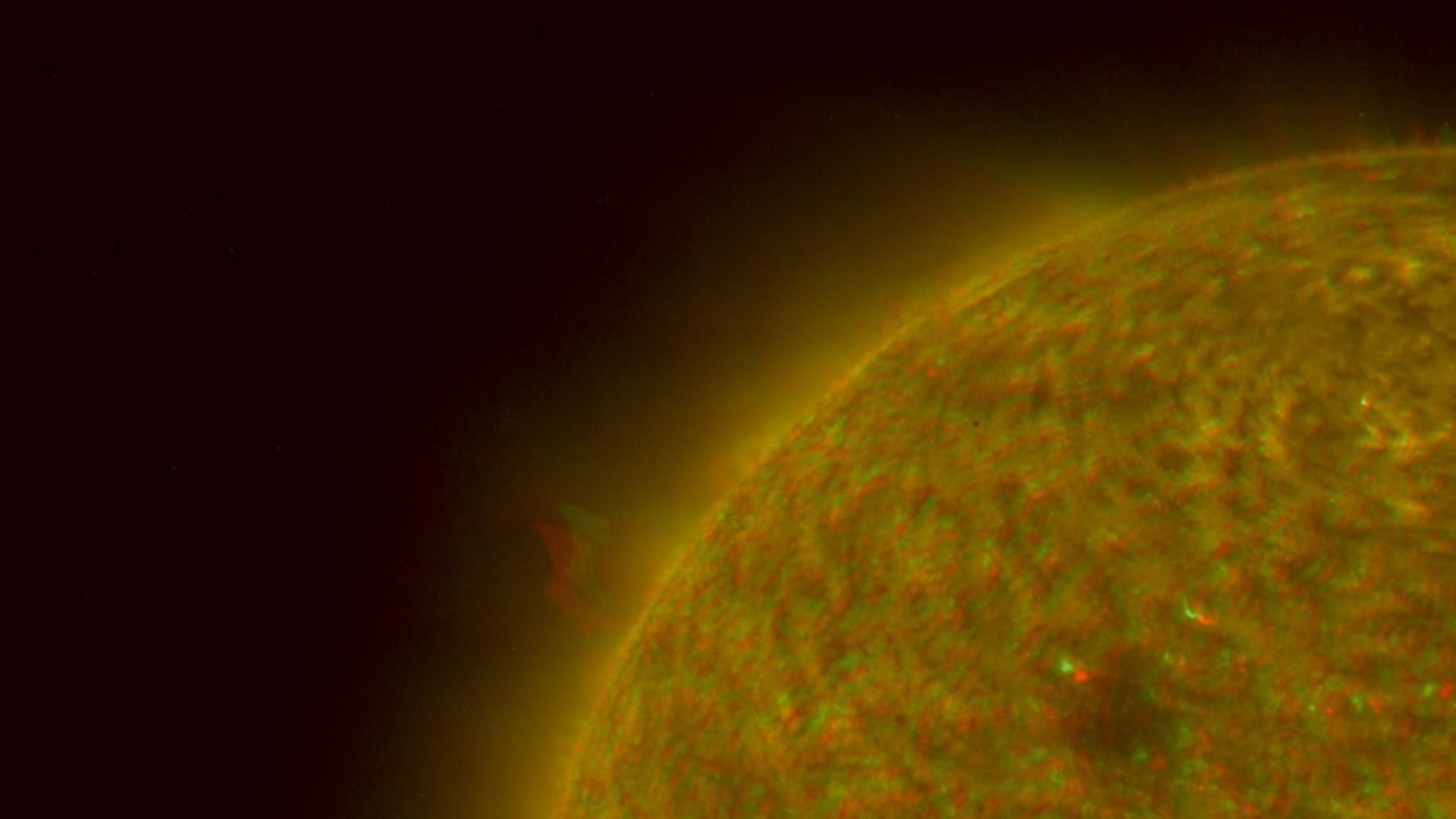
Photo: NASA/JPL / NASA (Public domain)

What Sun Conjunct Moon in a Birth Chart Means

Sun conjunct Moon in a birth chart is read as fusion, not cooperation. In Western astrology, the Sun is associated with vitality, will and the core sense of self. The Moon describes emotional needs, instinctive reactions and what registers as comfort. When the two sit at the same degree of the zodiac, astrologers do not picture two drives negotiating. They picture one current wearing two names, which is why this placement is so often called undivided. The Sun supplies the direction; the Moon supplies the felt sense of home. Here they share an address.

Keep the word natal in view. This is permanent architecture, not weather. The Moon does return to the Sun's degree roughly every month, and those monthly contacts are their own story. The natal conjunction, though, is a fixed feature of the chart you were born with. It does not switch on and off. It is simply how the chart was built.

If you are newer to aspects, the explainer on how conjunctions differ from squares and oppositions is a useful companion to this one.

What a Conjunction Is Said to Describe

A conjunction is an angle of about zero degrees: two planets side by side, close enough that their meanings blend. Astrologers treat it as the most concentrated of the major aspects. It reads less as a tension between two parts of the self than as those parts operating as a single force. With the Sun and Moon, that combined force is often framed as a seamless line between who you are and what you feel. The inner weather and the outer identity tend to report the same thing.

One Strong Expression

Read smoothly, this is self-consistency. Feelings arrive already aligned with purpose, and decisions are not experienced as a tug of war between head and heart. People with this signature are sometimes described as knowing what they want and why, and as hard to separate from whatever they are feeling in a given moment. In this expression the placement reads as emotional clarity and a fairly direct line between instinct and action.

One Challenging Expression

The same fusion can be read as a shortage of distance. If identity and emotion are one thing, it can be hard to tell which one is speaking. Astrologers sometimes describe this as being so fused with a mood that it feels like a fact, or as taking personally what might simply be circumstance. Strong feeling may pass straight into behavior with little pause between. No placement is good or bad on its own; these are two readings of one signature, and most charts blend them.

Orb, Signs and Houses

The Usual Orb

Orbs are convention rather than fixed measurement. Many astrologers keep Sun-Moon conjunctions within about eight degrees, and some tighten that to six or fewer. Because the Moon moves roughly thirteen degrees a day, the tighter the orb, the more precisely the two bodies sit together and the more concentrated the reading tends to be. A wider orb is often described as a softer, less insistent version of the same theme. For comparison, a full moon at the opposition is read as the reverse pattern: identity and feeling facing each other across the chart.

How the Signs Shape It

The sign the pair occupies colors the fusion. In an earth sign, identity and feeling may read as steady and practical; in fire, as immediate and expressive; in air, as verbal and idea-led; in water, as absorbent and intuitive. The sign describes the flavor of the combined force, not its strength. Two people can share the conjunction and relate to it very differently depending on the sign it falls in.

How the House Places It

The house sets the conjunction in the landscape of daily life, and this is often where a reading turns specific. A first-house pairing is read through identity and self-presentation, a seventh through partnership, a tenth through public role. The house is the room this fused energy is said to live in, and it is usually the detail people recognize first.

How to Read It in Context

No aspect operates alone. Astrologers look at what else touches the Sun and Moon, what sign the chart's ruler occupies, and whether either body sits near a cusp. A conjunction in an otherwise quiet chart reads differently than the same conjunction flanked by other close contacts. The fusion is the theme; the rest of the chart sets the volume. The same logic applies to any close pairing of two planets, which is why astrologers rarely read a single aspect in isolation.

Sun conjunct Moon is best understood as a chart saying that the inner life and the sense of self are not two things but one. Whether that reads as clarity or as closeness without distance depends on the sign, the house and everything around it. Approached as a mirror for reflection rather than a verdict, it offers a useful question: when you check in with yourself, can you tell the difference between what you feel and who you are? Sitting with that question is the whole practice. The placement does not answer it for you.

Today's Horoscope

September 29, 2026

All signs →

Get Your Horoscope in Your Inbox

A weekly note on your sign, the moon, and what the stars are up to. No spam, unsubscribe anytime.

We respect your privacy. Unsubscribe at any time.